
Sep . 08, 2025 15:51 Back to list
Organic Vermiculite: Sustainable Soil Amendment Choice
In the quest for sustainable agriculture, organic vermiculite emerges as a revolutionary soil amendment, harmonizing productivity with ecological responsibility. Sourced from natural minerals and processed without synthetic additives, it revitalizes soil structure while conserving water and nutrients. Xingtai Luxi Environmental Protection Technology Co., Ltd., established in 2013 and ISO9001-certified, leverages its expertise in metallurgical materials to produce premium vermiculite for horticulture. With a 130,000 m² facility in Hebei, China, the company prioritizes quality and sustainability, serving global markets from Japan to Mexico. This article explores how garden vermiculite transforms soil health, empowers organic farming, and aligns with eco-conscious gardening.
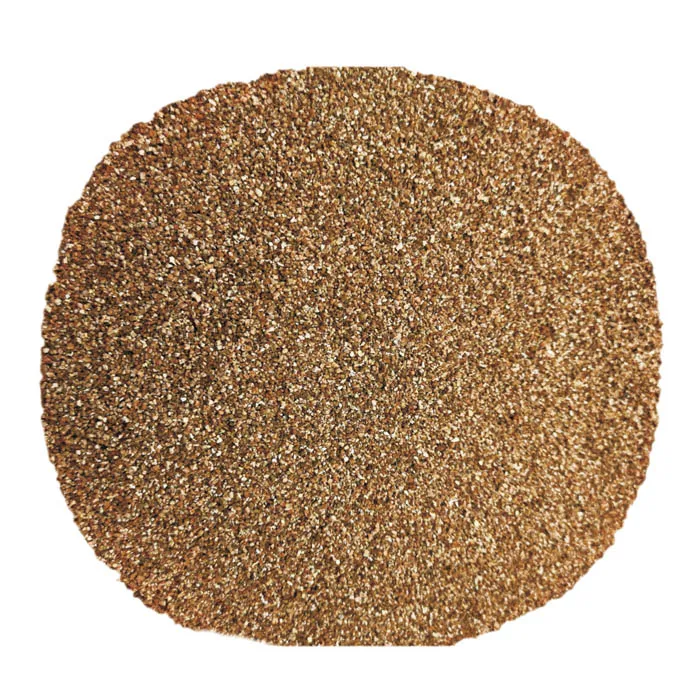
Understanding Vermiculite: Composition and Natural Origins
Vermiculite is a hydrous phyllosilicate mineral mined from volcanic deposits. When heated to 1,000°C, it expands into accordion-like granules—a process called exfoliation. This transformation creates garden vermiculite, prized for its low density, high cation-exchange capacity (CEC), and ability to retain water and nutrients. Unlike synthetic soil conditioners, organic vermiculite undergoes minimal processing, avoiding chemical treatments to preserve its natural integrity.
Xingtai Luxi’s vermiculite boasts a unique geochemical profile, verified through ISO9001 protocols. Its composition enhances soil fertility by slowly releasing essential minerals:
Silica (SiO₂) strengthens plant cell walls.
Magnesium (MgO) and Iron (Fe₂O₃) support chlorophyll synthesis.
Low sulfur (S) and carbon (C) ensure pH neutrality and organic compliance.
Chemical Composition Table
|
Component |
Percentage (%) |
Role in Soil Health |
|
SiO₂ |
40–50 |
Improves soil structure; aids nutrient retention |
|
Al₂O₃ |
20–30 |
Enhances clay-like properties for moisture control |
|
CaO |
0–2 |
Provides calcium for root development |
|
MgO |
1–5 |
Essential for photosynthesis enzymes |
|
Fe₂O₃ |
5–15 |
Boosts iron availability; prevents chlorosis |
|
S |
<0.05 |
Minimizes salinity stress |
|
C |
<0.5 |
Ensures organic certification compliance |
Garden Vermiculite: Practical Applications for Home Growers
Garden vermiculite is a multitasking powerhouse for small-scale and urban agriculture. Its lightweight, sterile nature makes it ideal for:
Seed Starting: Mix with peat moss to create moisture-retentive germination beds.
Potting Mixes: Blend 30% vermiculite with compost to prevent compaction in containers.
Lawn Repair: Sprinkle over grass seed to shield seedlings from erosion and drought.
Composting: Accelerate decomposition by aerating organic waste piles.
For hydroponics, garden vermiculite acts as a standalone medium or perlite companion, increasing oxygen diffusion to roots. In xeriscaping, it reduces irrigation needs by 40% by storing water in its layered structure. Unlike peat moss, which degrades rapidly, organic vermiculite maintains porosity for 3–5 years, offering long-term soil benefits.
Why Choose Organic Vermiculite? Environmental and Agronomic Benefits
Organic vermiculite stands at the intersection of efficacy and sustainability. Key advantages include:
Water Conservation: Holds 3–4 times its weight in water, mitigating drought stress.
Nutrient Stewardship: High CEC (100–150 meq/100g) binds fertilizers like ammonium and potassium, reducing leaching.
Heavy Metal Mitigation: Traps contaminants (e.g., lead, cadmium) via ionic adsorption.
Carbon Footprint: Fully recyclable and mined with low-energy exfoliation techniques.
Compared to non-organic alternatives, Xingtai Luxi’s organic vermiculite contains ultra-low sulfur (<0.05%), eliminating soil acidification risks. Its trace minerals (Fe₂O₃, MgO) also replace synthetic micronutrient additives. For organic certification, it meets OMRI standards due to negligible carbon content (<0.5%) and absence of chemical residues.
FrAQs About Organic Vermiculite
What distinguishes organic vermiculite from regular vermiculite?
Organic vermiculite avoids chemical treatments during exfoliation and mining. Xingtai Luxi uses thermal processing only, ensuring zero synthetic residues. It also meets strict compositional thresholds (e.g., S<0.05%, C<0.5%), qualifying for organic certifications like OMRI.
How does garden vermiculite enhance sandy or clay soils?
In sandy soils, garden vermiculite boosts water retention by 200%, preventing nutrient washout. In clay soils, its laminar structure creates air channels, improving drainage and root penetration. A 25% soil amendment ratio is optimal for texture correction.
Can vermiculite be reused across planting seasons?
Yes! Sterilize used vermiculite by baking at 120°C for 30 minutes. Its mineral matrix remains stable for 4+ years, though nutrient-holding capacity gradually declines after Year 3.
Why is organic vermiculite safer than synthetic soil conditioners?
Synthetic polymers (e.g., hydrogels) can release acrylamide toxins. Organic vermiculite is inert, non-toxic, and pH-neutral (6.5–7.2), making it safe for edible crops and beneficial soil microbes.
How much garden vermiculite should I add to raised beds?
For new beds, apply 1 part vermiculite to 3 parts soil-compost blend (depth: 6–8 inches). Replenish annually at 10% volume to maintain porosity.
Organic vermiculite redefines sustainable soil management by merging geological ingenuity with ecological ethics. Xingtai Luxi Environmental Protection Technology Co., Ltd. champions this vision through rigorously tested, compositionally balanced products that empower growers to achieve abundance without environmental trade-offs. As regenerative agriculture gains urgency, garden vermiculite offers a simple, scalable solution—transforming depleted earth into resilient, life-supporting ecosystems.
-
Professional Boiler Refractory Material Supplier for Industrial Efficiency
NewsApr.16,2026
-
How to Choose the Best refractory materials suppliers for Success
NewsApr.09,2026
-
Understanding Refractory Bricks Raw Materials for High Temperature Applications
NewsApr.07,2026
-
PLIbrico Refractory Materials Understanding Applications and Benefits
NewsApr.04,2026
-
Advancements in Reversible Thermal Expansion Refractory Materials for High Temperature Applications
NewsMar.31,2026
-
Comprehensive Guide to Refractory Kiln Lining Material Selection and Applications
NewsMar.28,2026