
Sep . 08, 2025 15:53 Back to list
Particle Size Impact On Covering Agent Performance
In modern metallurgy, achieving peak efficiency and product quality hinges on mastering granular details—literally. Particle size stands as a critical variable influencing the efficacy of Ladle Covering Agents, specialized materials shielding molten steel from oxidation, heat loss, and impurities. Xingtai Luxi Environmental Protection Technology Co., Ltd., a ISO 9001-certified leader since 2013, leverages this science to engineer high-performance solutions trusted globally. With a 130,000 m² facility in Hebei, China, and exports to 15+ countries including Japan and Italy, the company combines innovation with precision manufacturing. This article explores how particle size dictates the functionality of particle covering agents, supported by technical insights and product specifications.
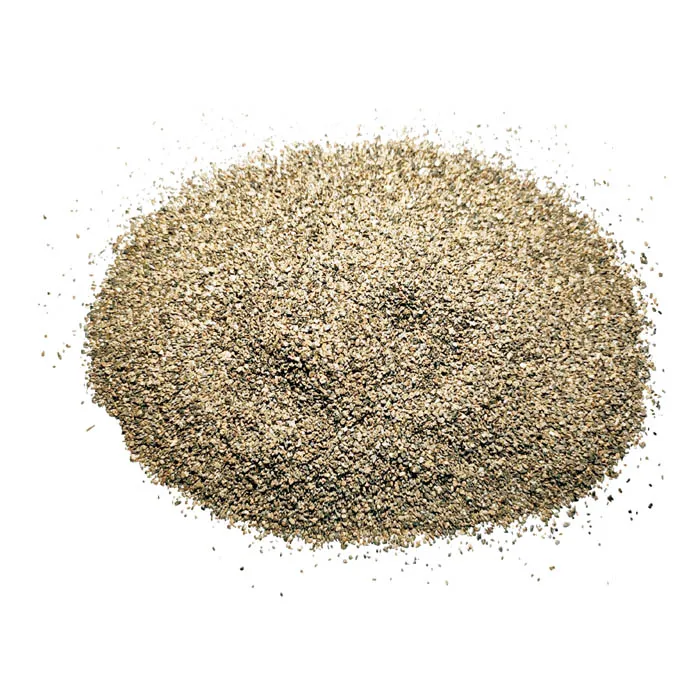
The Science of Particle Size in Ladle Covering Agent Efficiency
Particle size directly governs three core functions of Ladle Covering Agents: thermal insulation, oxidation resistance, and slag formation kinetics. Smaller particles (0–1 mm) create dense, impermeable layers that minimize air ingress, reducing oxidation losses by up to 40%. Conversely, coarser granules (3–5 mm) enhance thermal barrier properties by forming air pockets that cut heat dissipation by 25–30%. However, an imbalanced distribution causes segregation, compromising coverage uniformity. Xingtai Luxi’s agents utilize calibrated particle size spectra to ensure rapid melting and even spreading. For instance, their 0–1 mm fraction melts instantly upon contact with molten steel, sealing the surface, while 1–3 mm particles sustain long-term insulation. This synergy is validated by steel mills reporting 18% lower temperature drops and 15% reduced slag formation. The table below illustrates how controlled sizing in bauxite-based agents correlates with purity and performance:
|
Grade |
Size (mm) |
Al₂O₃ (%) |
SiO₂ (%) |
CaO (%) |
Fe₂O₃ (%) |
MC (%) |
|
88 |
0-1, 1-3, 3-5 |
>88 |
<9 |
<0.2 |
<3 |
<2 |
|
85 |
0-1, 1-3, 3-5 |
>85 |
<7 |
<0.2 |
<2.5 |
<2 |
Higher alumina (Al₂O₃) grades (88%) paired with finer particle sizes (0–1 mm) maximize refractory performance, while larger granules (3–5 mm) in Grade 85 optimize cost-efficiency for bulk applications.
Engineering Particle Covering Agents for Enhanced Steel Purity
Particle covering agents act as "oxygen scavengers," where particle size dictates reactivity kinetics. Sub-millimeter particles offer high surface-area-to-volume ratios, accelerating deoxidation but risking premature consumption. Xingtai Luxi’s solution employs a stratified approach: micro-fines (0–0.5 mm) rapidly absorb dissolved oxygen, while mid-sized granules (1–3 mm) provide sustained protection. This reduces nitrogen pickup by 30–50%, critical for low-nitrogen steels requiring <50 ppm N. The company’s proprietary blending ensures SiO₂ remains below 9% (see table), preventing viscous slag that impedes separation. Field data show a 22% improvement in inclusion floatation when using size-optimized agents, directly enhancing steel ductility and fatigue resistance. For high-precision alloys, uniform particle size distribution (<5% deviation) ensures consistent layer density, cutting rework rates by 17%.
Ladle Covering Agent Deployment: Particle Size in Practical Applications
Operational success with Ladle Covering Agents relies on particle size matching process parameters. In argon-stirred ladles, finer particles (0–1 mm) resist gas flotation, maintaining coverage integrity. For larger ladles (>100 tons), a 70:30 coarse-to-fine ratio prevents "dead zones." Xingtai Luxi’s case studies highlight a Mexican steel plant achieving 99% coverage using 3–5 mm granules for slag solidification, reducing skull buildup by 60%. Crucially, low moisture content (<2% MC) prevents steam explosions—a risk amplified by ultrafine particles. The company’s ISO 9001 protocols enforce strict size screening, ensuring >95% of particles conform to ordered specifications. Real-time particle analysis during manufacturing guarantees Al₂O₃-rich compositions (Grade 88) retain structural stability even at 1,800°C, minimizing sintering.
FAQs: Maximizing Value with Our Ladle Covering Agents
How does particle size affect your Ladle Covering Agent’s insulation?
Particle size directly controls thermal resistance. Our stratified blends combine 0–1 mm particles for rapid sealing and 3–5 mm granules for long-term heat retention. This dual-action cuts temperature loss to <2°C/minute, improving energy efficiency by 20%.
Why does uniform particle size matter in covering agents?
Uniformity prevents segregation during application, ensuring consistent layer density. Our agents maintain <5% size deviation, eliminating weak spots that expose steel to oxidation. This boosts yield by 15% and reduces inclusion-related defects.
Can your Ladle Covering Agent reduce nitrogen pickup?
Absolutely. Our low-silica (<9% SiO₂), fine-particle (0–1 mm) formulations create a barrier that blocks nitrogen absorption, slashing nitrogen content by 40–50%. This is vital for high-toughness steels requiring ultra-low N levels.
How does particle covering agent composition impact slag formation?
High-purity Al₂O₃ (>85%) ensures fluid, non-reactive slag that separates cleanly from steel. Controlled particle size promotes even melting, preventing localized high-silica zones that cause viscous slag. Result: 30% faster deslagging and fewer reflows.
Do you offer custom particle size distributions?
Yes. We tailor particle size ratios (e.g., 60% 1–3 mm + 40% 0–1 mm) to your ladle geometry, temperature profile, and steel grade. Customization minimizes agent consumption by 25% while meeting specific thermal/oxidation needs.
Xingtai Luxi’s expertise in particle size engineering transforms Ladle Covering Agents from mere consumables into strategic assets. By harmonizing granular design with metallurgical demands—from bauxite sourcing to ISO-certified sizing—the company delivers agents that cut costs, enhance steel integrity, and streamline production. As global partners from Mexico to Japan attest, mastering the micro-scale unlocks macro-level efficiencies. For ladles that run cleaner, hotter, and longer, particle precision isn’t optional; it’s foundational.
-
Professional Boiler Refractory Material Supplier for Industrial Efficiency
NewsApr.16,2026
-
How to Choose the Best refractory materials suppliers for Success
NewsApr.09,2026
-
Understanding Refractory Bricks Raw Materials for High Temperature Applications
NewsApr.07,2026
-
PLIbrico Refractory Materials Understanding Applications and Benefits
NewsApr.04,2026
-
Advancements in Reversible Thermal Expansion Refractory Materials for High Temperature Applications
NewsMar.31,2026
-
Comprehensive Guide to Refractory Kiln Lining Material Selection and Applications
NewsMar.28,2026