
Oct . 14, 2025 09:35 Back to list
Environmentally friendly granule covering agent, non-toxic
An insider’s take on greener granule covering agents for steelmaking
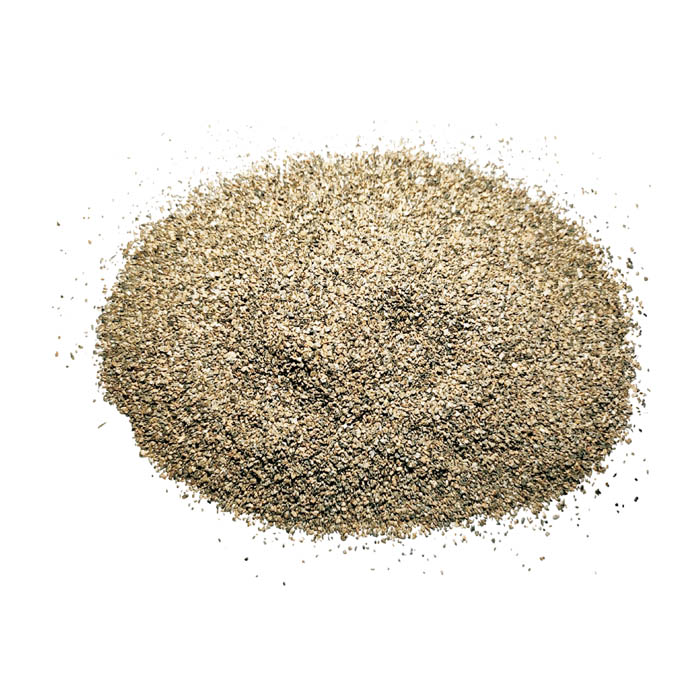
If you’ve worked a melt deck in the last five years, you’ve probably heard about the Environmentally friendly granule covering agent. To be honest, the shift away from carbonized rice husk wasn’t just fashionable—it was inevitable. Stricter emissions rules, shop-floor pushback on smoke and dust, and the annoying crusting at the wrapping mouth all piled up. Many customers say the new granulated approach spreads cleaner, insulates better, and keeps the crew happier.
Industry trend in plain terms
The market is moving to fluorine-free, low-dust, low-smoke granules that spread instantly and resist crusting. It seems obvious now, but back when rice husk was king, people accepted smoke and weak insulation as “just how it is.” Not anymore. Plants want quantifiable thermal retention, cleaner air at the ladle and tundish, and compliance paperwork that doesn’t keep EHS up at night.
What’s inside and how it’s made
Typical formulation (varies by grade): expanded perlite/vitrified microspheres for low thermal conductivity, refined aluminosilicate carriers, trace carbonaceous modifiers for wetting control, and a clean binder system. The Environmentally friendly granule covering agent is usually pelletized 2–5 mm, then oven-dried to stabilize moisture and dust levels.
Process flow (shop-floor version): raw materials → precision dosing → intensive mixing → pelletizing → low-temperature drying → de-dusting → QC (sieve curve, bulk density, LOI) → bagging (25 kg or 1 t FIBC). Testing often references ASTM/ISO methods for density, sieve distribution, and thermal performance.
Specification snapshot (typical)
| Property | Spec (≈/around) | Test standard |
|---|---|---|
| Particle size | 2–5 mm, PSD tuned per order | ISO 3310 (sieve analysis) |
| Bulk density | 0.35–0.55 g/cm³ | ASTM C29 |
| Thermal conductivity @800°C | 0.08–0.12 W/m·K | ASTM C177 |
| Moisture | Oven @110°C | |
| Loss on ignition | Muffle furnace | |
| Fluoride | Non-detect/low, F-free grade | Ion-selective electrode |
| Service life | Tundish cover ≈2–5 h/sequence | In-plant SOP |
Where it’s used and why it sticks
Applications: BOF/EAF ladle surface cover, tundish insulation during sequence casting, holding ladles, and even small ingot molds. Advantages we keep hearing: quick spreadability, strong heat retention, minimal crusting at the wrapping mouth, and visibly lower smoke. In fact, operators report clearer line-of-sight during teeming—small but meaningful.
Vendor comparison (real-world feel)
| Item | Xingtai Luxi (Environmentally friendly granule covering agent) |
Carbonized rice husk (generic) | Imported fluorine-bearing granule |
|---|---|---|---|
| Dust/smoke | Low | High | Low–medium |
| Insulation | Strong | Weak–variable | Strong |
| Fluoride | F-free | F-free | May contain F |
| Crusting at mouth | Minimal | Frequent | Occasional |
| Compliance docs | ISO/REACH-ready | Basic | Strong |
Customization and packaging
Custom PSD (2–4 mm for fast spread; 3–6 mm for wind-prone bays), tuned bulk density, and optional exothermic grade for winter starts. Packaging: 25 kg valve bags or ≈1 t FIBC. Shelf life around 12 months in dry storage.
Field results (two quick cases)
- Integrated mill, Hebei: switching to Environmentally friendly granule covering agent cut visible smoke ≈60% and reduced tap-to-tap heat loss by ≈8–12°C, per shift logs.
- EAF shop, Shandong: tundish cover held for a 4-hour sequence; operators noted “no crust at mouth” and smoother top-skim—feedback was surprisingly positive.
Compliance, tests, and paperwork
Typical dossiers include ISO 9001/14001 certificates, REACH statements (no SVHC), and air-emission test notes aligned with GB 16297 for dust. Thermal data often uses ASTM C177; particle size per ISO 3310. Real-world use may vary with steel grade, bay airflow, and operator technique—I guess that’s the honest truth on any shop floor.
How to deploy
Preheat ladle/tundish as usual → add a starter layer (≈0.8–1.2 kg/m²) → top up as mirror opens → maintain a uniform blanket. Avoid over-throwing into the stream; let it spread naturally.
-
Professional Boiler Refractory Material Supplier for Industrial Efficiency
NewsApr.16,2026
-
How to Choose the Best refractory materials suppliers for Success
NewsApr.09,2026
-
Understanding Refractory Bricks Raw Materials for High Temperature Applications
NewsApr.07,2026
-
PLIbrico Refractory Materials Understanding Applications and Benefits
NewsApr.04,2026
-
Advancements in Reversible Thermal Expansion Refractory Materials for High Temperature Applications
NewsMar.31,2026
-
Comprehensive Guide to Refractory Kiln Lining Material Selection and Applications
NewsMar.28,2026