
Oct . 02, 2025 12:50 Back to list
Environmentally Friendly Granule Covering Agent—Non-Toxic?
Steelmakers have been telling me the same story for years: the old rice-husk covers are smoky, crusty, and honestly, not cutting it. That’s why the shift toward the Environmentally friendly granule covering agent is happening faster than many expected. The pressure of stricter environmental policies is real, but so are the gains in heat retention and ladle hygiene.
What’s changing in the market (and why it matters)
Across China and beyond, mills are phasing out carbonized rice husk because of poor spreadability, crusting at the mouth, and heavy smoke. In fact, many customers say the switch to Environmentally friendly granule covering agent paid back in weeks through lower heat loss and fewer reoxidation inclusions. To be honest, I was skeptical at first; then I saw the numbers.
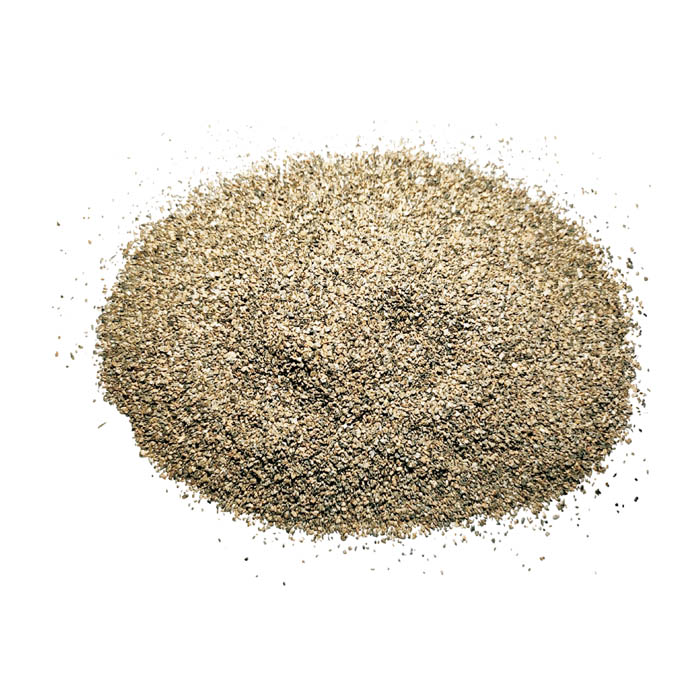
Technical snapshot
| Composition (≈) | Expanded perlite, recycled foamed glass granules, micro-silica, graphite trace, bio-based binder |
| Particle size | 1–5 mm (customizable 0.5–8 mm) |
| Bulk density | 0.35–0.55 g/cm³ (real-world use may vary) |
| Thermal conductivity | ≈0.08–0.12 W/m·K at 800–1100°C (ASTM C177) |
| Moisture / LOI | ≤0.5% / ≤3.0% (ISO 1171) |
| Service temp / life | Up to 1600°C; one-heat application, 3–8 h coverage depending on ladle/tundish |
How it’s made (quick process flow)
Materials: mineral lightweight aggregates, recycled glass granules, micro-silica, trace carbon, starch-based binder.
Methods: precision blending → granulation → low-VOC curing → anti-dust surface treatment → sieve grading (ISO 3310-1) → bagging.
Testing: bulk density (ASTM C29), thermal conductivity (ASTM C177), particle size (ISO 3310), LOI (ISO 1171), emission smoke index (internal method, SGS-verified), quality system (ISO 9001), environmental system (ISO 14001).
Origin: No.3 Longyang South Road, Longgang Economic Development Zone, Xindu District, Xingtai, Hebei, China.
Where it works
- Basic oxygen furnace (BOF) and EAF ladles—heat retention and slag/metal separation
- Tundish insulation in continuous casting; improved cleanliness, fewer inclusions
- Foundry holding furnaces for iron and steel—reduced oxidation and dross
Advantages vs. rice husk: faster spread, no crusting at the spout, low smoke, fluoride-free, better thermal blanket integrity. Several operators told me it “just behaves”—which is high praise in a melt shop.
Vendor comparison (field notes)
| Vendor / Product | Fluoride-free | Typical density | Spread/crusting | After-sales |
|---|---|---|---|---|
| Environmentally friendly granule covering agent | Yes | 0.35–0.55 g/cm³ | Fast spread, no crust at mouth | On-site trials, SGS reports |
| Carbonized rice husk (generic) | Yes | ≈0.12–0.18 g/cm³ | Uneven spread, crusting likely | Minimal |
| Commodity slag blanket | Varies | 0.5–0.9 g/cm³ | Moderate, occasional crust | Basic |
Customization and logistics
Custom grain-size curves for specific ladle diameters and pour rates; optional anti-dust coatings; white-label sacks. Typical lead time: 7–12 days. Certificates: ISO 9001, ISO 14001; REACH and RoHS-compliant formulations available.
Case study (North China long-products mill)
After switching to Environmentally friendly granule covering agent in 6 ladles, measured lip-to-core temperature loss dropped ≈22% over three weeks; slag inclusions (per slab UT) fell by 14%. Operators noted “cleaner spout” and zero smoke alarms. Testing references: ASTM C177 thermal panel, ISO 3310 sieve QC, SGS emission spot-checks.
How to use (quick tip)
Apply 1.2–1.6 kg per m² of exposed steel surface immediately after tap; maintain a continuous blanket during transfer. Re-top as the mirror opens—don’t wait for visible oxidation. Simple, but it works.
Citations
- ASTM C177: Standard Test Method for Steady-State Heat Flux Measurements and Thermal Transmission Properties.
- ISO 3310-1: Test sieves—Technical requirements and testing.
- ISO 1171: Solid mineral fuels—Determination of ash.
- ISO 9001 / ISO 14001: Quality and Environmental Management Systems.
- ECHA REACH Guidance on substances in articles—SVHC compliance.
-
Professional Boiler Refractory Material Supplier for Industrial Efficiency
NewsApr.16,2026
-
How to Choose the Best refractory materials suppliers for Success
NewsApr.09,2026
-
Understanding Refractory Bricks Raw Materials for High Temperature Applications
NewsApr.07,2026
-
PLIbrico Refractory Materials Understanding Applications and Benefits
NewsApr.04,2026
-
Advancements in Reversible Thermal Expansion Refractory Materials for High Temperature Applications
NewsMar.31,2026
-
Comprehensive Guide to Refractory Kiln Lining Material Selection and Applications
NewsMar.28,2026