
Sep . 02, 2025 15:34 Back to list
Fe-C Composite Pellets For Efficient Direct Reduction Ironmaking
The global steel industry stands at a crossroads, balancing relentless demand with increasing pressure to reduce its environmental footprint. Traditional blast furnace ironmaking, while robust, is energy-intensive and a significant source of CO2 emissions. Direct Reduction Ironmaking (DRI) emerges as a compelling alternative, offering a pathway to lower emissions and greater flexibility, especially when paired with electric arc furnaces (EAFs). However, optimizing DRI processes for efficiency, cost-effectiveness, and final steel quality remains an ongoing pursuit. Enter the innovative solution: Fe-C composite pellets. This article delves into how these engineered materials, particularly those leveraging spherical alloy materials technology, are transforming DRI, paving the way for a more sustainable and productive steel future.
Solving Industry Challenges with Fe-C Composite Pellets
The DRI process reduces iron ore (typically in pellet or lump form) using reducing gases like H₂ and CO, derived from natural gas or syngas, at temperatures below the melting point of iron. The result is Direct Reduced Iron (DRI), a highly metallized but porous solid product rich in iron. While DRI offers advantages, integrating it seamlessly into EAF steelmaking presents hurdles:
Carbon Deficiency: DRI inherently lacks sufficient carbon, a crucial element for efficient EAF operation and achieving target carbon levels in the final steel. This necessitates adding carbon separately (e.g., anthracite, coke breeze, or recarburizers), leading to handling complexity, potential inefficiencies, and increased cost.
Uneven Carbon Distribution: External carbon addition can result in uneven dissolution and distribution within the molten steel bath, impacting consistency and quality.
Process Inefficiency: Separate handling and feeding of DRI and carbon sources add steps, increase energy consumption (preheating carbon), and extend melt-in times in the EAF.
Quality Control Variability: Achieving precise and consistent carbon levels requires careful monitoring and control of separate material streams.
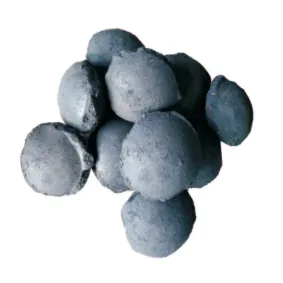
Fe-C composite pellets directly address these challenges. They are precisely engineered materials where fine iron ore concentrate or mill scale is intimately mixed with a high-purity carbon source (like calcined petroleum coke or anthracite coal) and a binder, then agglomerated into pellets. The genius lies in their structure: each pellet contains both the iron units and the precise amount of carbon required for the subsequent steelmaking step, inherently bound together. This integrated design eliminates the need for separate carbon addition, streamlines logistics, ensures uniform carbon distribution within the iron matrix, and significantly enhances process efficiency and predictability in the EAF. Think of it as delivering the iron ore and the exact recipe of carbon needed, pre-mixed and ready for optimal reduction and melting.
The Core Advantage: Understanding Fe-C Alloy Formation
The transformative power of Fe-C composite pellets goes beyond mere convenience; it lies in the fundamental metallurgical process they enable – the in-situ formation of a Fe-C alloy during reduction.
Within the high-temperature reducing atmosphere of a DRI shaft furnace or rotary kiln, two critical reactions occur simultaneously on and within each composite pellet:
Iron Oxide Reduction: The reducing gases (primarily H₂ and CO) react with the iron oxides (Fe₂O₃, Fe₃O₄) in the pellet, stripping away oxygen atoms and producing metallic iron (Fe).
Fe₂O₃ + 3H₂ → 2Fe + 3H₂O
Fe₃O₄ + 4H₂ → 3Fe + 4H₂O
FeO + H₂ → Fe + H₂O
Carbon Solution and Carburization: Concurrently, the finely dispersed, high-purity carbon within the pellet reacts with the freshly formed metallic iron. Carbon atoms dissolve into the solid iron lattice and form iron carbides (like cementite, Fe₃C). This process effectively carburizes the metallic iron as it is being formed.
3Fe (solid) + C (solid) → Fe₃C (solid)
C (solid) → C (dissolved in Fe)
This intimate contact and simultaneous reaction lead to the creation of a Fe-C alloy directly within the reduced pellet structure. The resulting DRI product isn't just porous metallic iron; it's a metallized pellet with a controlled, homogenous distribution of carbon, often present as fine iron carbides embedded in the iron matrix. This pre-alloying offers profound benefits:
Accelerated Melting in EAF: The Fe-C alloy has a lower melting point than pure iron, significantly reducing the energy and time required to melt the DRI in the electric arc furnace. This translates directly to shorter tap-to-tap times and higher productivity.
Enhanced Carbon Yield & Predictability: Carbon is already intimately combined with the iron, ensuring near-total dissolution and utilization in the EAF melt. This eliminates carbon "floaters" and guarantees precise, consistent final carbon levels in the liquid steel, reducing the need for downstream carbon adjustments and minimizing yield loss.
Improved Steel Quality: Homogeneous carbon distribution from the outset contributes to superior microstructure uniformity and enhanced mechanical properties in the final steel product. Reduced risk of localized high or low carbon zones improves consistency.
The formation of this Fe-C alloy within the Fe-C composite pellets is the cornerstone of their performance advantage over using separate DRI and carbon feeds.
Precision Engineering: Why Spherical Alloy Materials Matter
The performance of Fe-C composite pellets hinges not just on their chemical composition but critically on their physical form and structure. This is where the concept of spherical alloy materials becomes paramount. Xingtai Luxi leverages advanced agglomeration technology to produce pellets that are remarkably uniform spheres. This precise engineering delivers crucial operational benefits throughout the DRI and EAF processes
Superior Bed Permeability in DRI Shaft Furnaces: Uniform spherical alloy materials pack consistently, creating a porous burden structure within the reduction furnace. This allows reducing gases (H₂, CO) to flow evenly and freely through the entire pellet bed. Uniform gas contact ensures consistent reduction kinetics across all pellets, maximizing metallization and minimizing the risk of incomplete reduction or clustering. Irregular shapes or fines can lead to channeling (gas finding easy paths) or compaction, creating dead zones with poor reduction.
Enhanced Mechanical Strength: The pelletizing process, combined with optimized binders and thermal treatment (induration), produces spherical alloy materials with high cold compressive strength (typically >250 kg/pellet) and exceptional abrasion resistance. This minimizes breakdown (generation of fines) during handling, transportation, and charging into the furnace. Fines are detrimental as they impede gas flow and can be lost from the process.
Optimized Size Distribution: Tight control over pellet diameter (typically 8-16mm) ensures consistent behavior. Uniform size contributes to the permeability mentioned above and allows for precise control over reduction rates and residence times within the furnace.
Efficient Charging and Flow in EAF: The spherical shape facilitates smooth flow through handling systems (conveyors, bins, hoppers) and ensures consistent feeding into the EAF. This prevents bridging or erratic feeding patterns, crucial for maintaining stable arc operation and bath conditions during melting.
Maximized Surface Area/Volume Ratio: While dense, the spherical shape offers an optimal surface area for reaction with reducing gases during the DRI process and for heat transfer during melting in the EAF, promoting efficiency.
Reduced Dust Generation: Robust, spherical pellets generate significantly less dust during handling compared to irregular lumps or fine materials, improving the working environment and reducing material loss.
The investment in producing high-quality spherical alloy materials directly translates to smoother plant operation, higher yield, reduced maintenance, and ultimately, lower operating costs and better environmental performance. It's a testament to the holistic engineering behind effective Fe-C composite pellets.
Application Excellence: Implementing Fe-C Composite Pellets
The transition to Fe-C composite pellets represents a significant operational upgrade for DRI-EAF based steelmaking. Their implementation offers tangible benefits across the production chain:
DRI Plant Operation:
Simplified Burdening: Eliminates the need for separate carbon source handling, storage, and feeding systems. Only one material stream – the composite pellets – needs management.
Potential for Higher Productivity: Improved permeability and reduction kinetics can sometimes allow for increased throughput rates in the DRI reactor.
Reduced Energy Consumption: The exothermic nature of carbon oxidation (Boudouard reaction: C + CO₂ → 2CO) within the pellet can contribute heat to the reduction process, potentially lowering the overall energy requirement per ton of DRI produced compared to using separate carbon addition downstream.
EAF Steelmaking:
Dramatically Reduced Melt-in Times: The pre-formed Fe-C alloy melts faster than standard DRI plus separately added carbon. Reductions in power-on time of 10-20% are commonly reported.
Lower Specific Power Consumption (kWh/ton): Shorter melting times directly translate to significant energy savings.
Increased Furnace Productivity: Faster melting allows for more heats per day, maximizing furnace utilization.
Improved Process Stability & Predictability: Consistent chemistry (Fe and C) and uniform physical properties of the spherical alloy materials lead to more stable arc behavior, reduced foaming slag issues, and predictable melt chemistry evolution.
Enhanced Yield: Near-complete carbon utilization and reduced oxidation losses due to faster melting improve overall metallic yield.
Superior Steel Quality: Homogeneous carbon distribution contributes to consistent and improved mechanical properties in the final steel product.
Overall Economic Impact: The combined effects – energy savings, increased productivity, reduced electrode consumption (due to shorter arc time), lower carbon consumption (higher yield), reduced handling costs, and potential for using lower-cost iron ore fines – deliver a compelling reduction in the overall cost per ton of liquid steel, despite the potentially higher upfront cost per ton of the composite pellets compared to standard DRI.
Xingtai Luxi: Your Partner in Advanced Metallurgical Solutions
Driving this innovation in Fe-C composite pellets is Xingtai Luxi Environmental Protection Technology Co., Ltd. Established in 2013 and headquartered in the Longgang Economic Development Zone, Xingtai City, Hebei Province, China, Xingtai Luxi has rapidly grown into a leading professional metallurgical material manufacturer. Operating from a significant 60-acre facility with 130,000 square meters of construction area and employing over 100 skilled professionals, the company is deeply committed to excellence.
Xingtai Luxi's core expertise lies in developing high-performance carbon additives and engineered metallurgical materials. Their flagship product line, high-quality recarburizers (GPC), is renowned for its strong carbonization ability, low nitrogen content, uniform particle size, and high absorptivity – attributes directly transferable and crucial to the performance of their Fe-C composite pellets. This expertise ensures that the carbon component within their composite pellets is of the highest purity and reactivity.
Quality is paramount at Xingtai Luxi. Their rigorous manufacturing processes and commitment to consistency are validated by ISO 9001 quality management system certification. This dedication to quality control guarantees that every batch of Fe-C composite pellets meets exacting specifications for chemical composition, physical strength, and size distribution – essential for reliable performance in demanding DRI and EAF environments.
The company's reputation extends globally. While highly regarded by numerous domestic steel and foundry enterprises in China, Xingtai Luxi's products, including their advanced metallurgical materials, have successfully penetrated international markets, exporting to South Korea, Japan, Italy, Mexico, Southeast Asia, and beyond. This global reach underscores the universal value and performance of their solutions.
Product Specification: Xingtai Luxi Fe-C Composite Pellets
Xingtai Luxi's Fe-C composite pellets are engineered to deliver optimal performance in direct reduction and EAF steelmaking. The following table outlines the key parameters guaranteed for premium-grade pellets:
|
Parameter |
Specification |
Importance |
|
Fe (%) |
≥ 40% |
High iron content ensures maximum metallic yield per ton of pellets charged. |
|
C (%) |
≥ 25% |
Sufficient, high-purity carbon for effective in-situ Fe-C alloy formation and EAF needs. |
|
SiO₂ (%) |
≤ 10% |
Minimizes slag volume in both DRI reactor and EAF, improving efficiency and yield. |
|
S (%) |
≤ 0.4% |
Low sulfur content is critical for producing high-quality, low-sulfur steels. |
|
P (%) |
≤ 0.1% |
Low phosphorus content is essential for many steel grades, improving toughness. |
|
Size (mm) |
8-16 (Typical) |
Ensures optimal permeability in DRI furnaces and smooth handling/feeding. |
|
Cold Strength (kg/pellet) |
> 250 |
Minimizes fines generation during handling and transportation. |
|
Shape |
Spherical |
Maximizes bed permeability, flowability, and consistent reduction/melting. |
FAQs About Fe-C Alloy
What are the main advantages of using Fe-C composite pellets over standard DRI plus carbon?
The primary advantages are transformative. Fe-C composite pellets drastically shorten EAF melting times (10-20% reduction) due to in-situ Fe-C alloy formation, leading to significant energy savings and increased furnace productivity. They guarantee near-complete carbon utilization and highly uniform carbon distribution, enhancing steel quality consistency. Logistically, they simplify operations by eliminating separate carbon handling and feeding systems, reducing dust, and minimizing the risk of carbon-related process variations. The overall result is lower cost per ton of liquid steel.
How does the spherical shape benefit Fe-C alloy pellet performance?
The spherical alloy materials design is critical for efficiency. Uniform spheres ensure exceptional bed permeability in DRI shaft furnaces, allowing reducing gases to flow evenly for consistent metallization. High strength minimizes fines generation during handling. The shape facilitates smooth, reliable flow through all conveying and charging systems, preventing bridging and ensuring consistent feed into the EAF. This physical robustness and flowability are essential for stable, high-yield operation in both reduction and melting stages.
Why is low nitrogen crucial in Fe-C composite pellets?
Low nitrogen content (inherent from using high-purity carbon sources) is vital for producing high-quality steel. Nitrogen can cause embrittlement (strain aging), reduce toughness and ductility, and negatively impact weldability. By ensuring our Fe-C composite pellets have minimal nitrogen introduction, we help steelmakers achieve lower nitrogen levels in the final liquid steel, enhancing product performance, particularly for demanding applications like automotive grades, pipelines, and deep-drawing steels.
Can Xingtai Luxi customize Fe-C pellet composition or size?
Yes, absolutely. While our standard premium grade offers excellent performance (as per the specifications above), Xingtai Luxi understands that specific steel grades or DRI/EAF operating conditions might require tailored solutions. We offer customization options for parameters like Iron (Fe) content, Carbon (C) content, and precise size distribution within the spherical alloy materials range. Our technical team collaborates closely with customers to optimize pellet specifications for their unique process and product goals.
How does Xingtai Luxi ensure consistent Fe-C pellet quality?
Consistency is fundamental to our Fe-C composite pellets' performance. Xingtai Luxi enforces rigorous quality control at every stage: sourcing high-purity raw materials, employing advanced mixing and pelletizing technology, utilizing precise induration (thermal processing) controls, and conducting comprehensive batch testing. Our ISO 9001 certification underpins this systematic approach. We guarantee every shipment meets the specified chemical composition (Fe, C, S, P, SiO₂), physical strength, size distribution, and spherical form, delivering reliable, predictable
The shift towards more sustainable and efficient steelmaking is undeniable. Direct Reduction Ironmaking, coupled with Electric Arc Furnaces, offers a viable pathway, but its full potential requires continuous innovation. Fe-C composite pellets, particularly those engineered as high-performance spherical alloy materials forming a consistent Fe-C alloy, represent a significant leap forward.
By integrating iron and carbon at the raw material stage, these pellets solve fundamental challenges of separate feeding, uneven distribution, and process inefficiency. The benefits cascade through the entire production chain: optimized DRI operations, dramatically accelerated EAF melting, substantial energy savings, increased productivity, enhanced steel quality, and a reduced environmental footprint per ton of steel produced.
Xingtai Luxi Environmental Protection Technology Co., Ltd., with its deep expertise in metallurgical materials, stringent quality control (ISO 9001 certified), and commitment to innovation, stands ready as your partner. Our precisely formulated and manufactured Fe-C composite pellets are designed to unlock these advantages, helping steelmakers globally achieve greater competitiveness and sustainability. Embrace the engineered future of ironmaking – explore the potential of Xingtai Luxi's Fe-C Composite Pellets today.
-
Professional Boiler Refractory Material Supplier for Industrial Efficiency
NewsApr.16,2026
-
How to Choose the Best refractory materials suppliers for Success
NewsApr.09,2026
-
Understanding Refractory Bricks Raw Materials for High Temperature Applications
NewsApr.07,2026
-
PLIbrico Refractory Materials Understanding Applications and Benefits
NewsApr.04,2026
-
Advancements in Reversible Thermal Expansion Refractory Materials for High Temperature Applications
NewsMar.31,2026
-
Comprehensive Guide to Refractory Kiln Lining Material Selection and Applications
NewsMar.28,2026