
Feb . 27, 2026 01:55 Back to list
Optimizing Aluminum Casting Processes with Superior Aluminum Casting Refractory Material
Alluminum Casting Refractory Material: A Comprehensive Guide
The efficiency and quality of aluminum casting heavily rely on the proper selection of aluminum casting refractory material. These materials withstand extreme temperatures and corrosive environments, protecting molds and ensuring consistent casting results. This article delves into the types, applications, benefits, and considerations when choosing refractory materials for aluminum casting. Understanding these materials is vital for optimizing your casting processes and reducing costs. Xingtai LuXi Refractory Co., Ltd. provides a wide range of solutions to meet your specific needs.

Understanding the Role of Refractory Materials in Aluminum Casting
Refractory materials act as a protective barrier between the molten aluminum and the mold. They prevent erosion, maintain dimensional accuracy, and minimize metal penetration, resulting in higher-quality castings. Different types of refractory materials possess varying thermal properties, chemical stability, and mechanical strength. Selecting the right material depends on factors like the alloy being cast, casting temperature, and mold design. Factors such as thermal shock resistance, creep resistance and compatibility with the metal being cast must be considered.
Key Benefits: Improved casting quality, extended mold life, reduced metal penetration, enhanced dimensional accuracy, and increased production efficiency.
Types of Aluminum Casting Refractory Material
Several types of refractory materials are commonly used in aluminum casting. These include:
- Silica (SiO2): Cost-effective and suitable for lower temperature castings.
- Alumina (Al2O3): Offers higher refractoriness and chemical resistance.
- Magnesia (MgO): Excellent resistance to basic slag attack.
- Zirconia (ZrO2): Exceptional thermal shock resistance and high refractoriness.
- Graphite: Good thermal conductivity and resistance to thermal shock, often used for die casting.
The choice depends on the specific application and desired performance characteristics. Xingtai LuXi offers a wide variety of these materials tailored to aluminum casting processes.
Key Considerations When Selecting Aluminum Casting Refractory Material
Selecting the correct aluminum casting refractory material is paramount to success. Consider these factors:
- Melting Temperature: The material must withstand the peak casting temperature without deformation or degradation.
- Thermal Shock Resistance: The material's ability to resist cracking or spalling due to rapid temperature changes.
- Chemical Compatibility: The material must be inert to the molten aluminum alloy to prevent reactions and contamination.
- Permeability: The material's ability to allow gases to escape, preventing porosity in the casting.
- Cost-Effectiveness: Balancing performance with budgetary constraints.
Key Selection Criteria: Thermal stability, chemical inertness, permeability, mechanical strength, and cost.
Comparison of Common Refractory Materials for Aluminum Casting
Here’s a comparison table to help you understand the differences between common refractory materials:
Applications of Refractory Materials in Aluminum Casting
Refractory materials find diverse applications within the aluminum casting process, including:
- Crucibles: Holding and transferring molten aluminum.
- Mold Coatings: Protecting the mold surface from erosion and improving casting surface finish.
- Ladles: Pouring molten aluminum into molds.
- Filters: Removing impurities from the molten metal.
- Runners and Risers: Guiding the flow of molten aluminum.
Each application demands specific material properties to ensure optimal performance and casting quality. Contact Xingtai LuXi for specialized solutions.
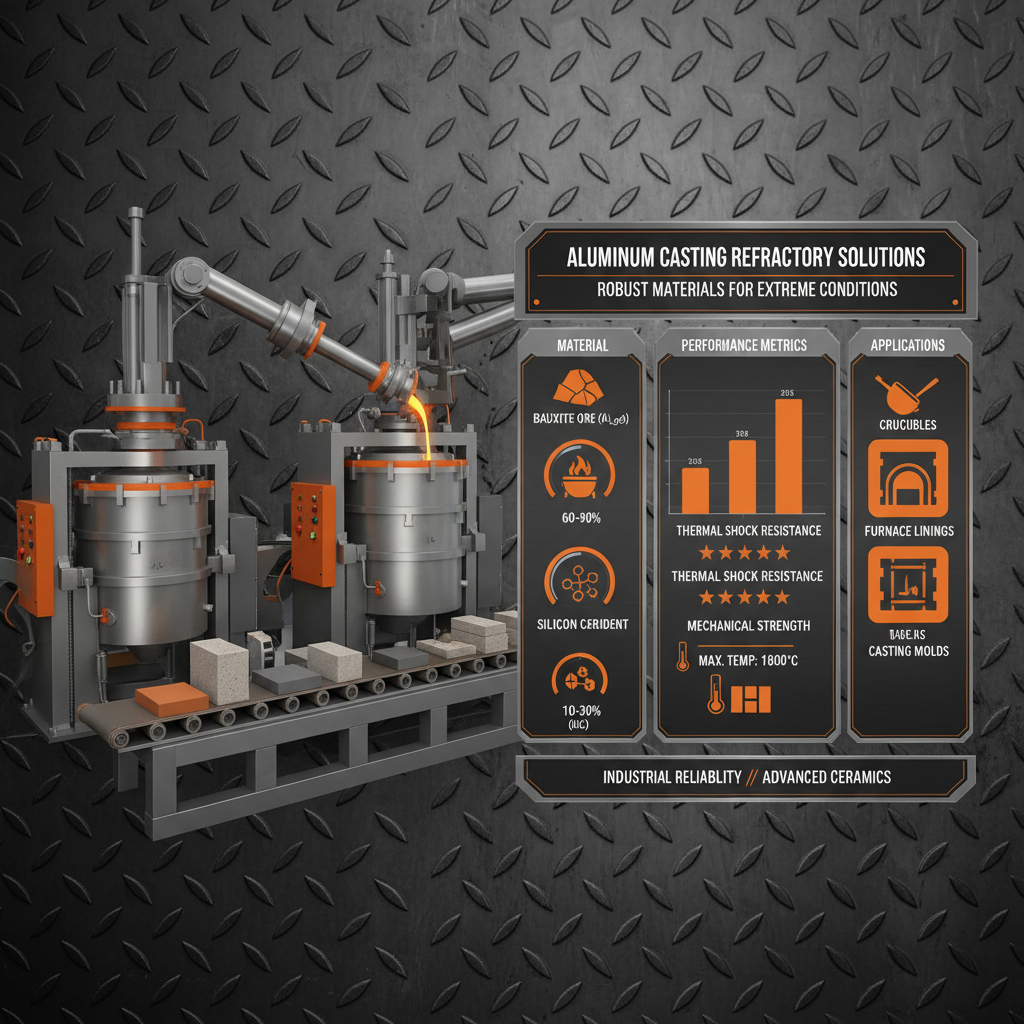
Conclusion: Optimizing Your Casting Process with the Right Refractory Materials
Choosing the right aluminum casting refractory material is a critical factor in achieving high-quality, efficient, and cost-effective aluminum casting. Understanding the properties of different materials and carefully considering your specific application requirements are essential. Xingtai LuXi Refractory Co., Ltd. is dedicated to providing superior refractory solutions and expert guidance to help you optimize your casting process.
Frequently Asked Questions (FAQs)
What is the expected lifespan of a refractory crucible used for aluminum casting?
The lifespan of a refractory crucible varies depending on the alloy being cast, the casting temperature, and the frequency of use. Generally, silicon carbide crucibles can last for 50-100 pours, while graphite crucibles may have a shorter lifespan of 20-50 pours. Regular inspection for cracks, erosion, and thinning of the crucible walls is crucial. Proper handling and storage practices can also extend the crucible's lifespan. Utilizing a crucible coating can also help improve its longevity.
How does the permeability of a refractory material affect casting quality?
Permeability refers to the material’s ability to allow gases to pass through it. Lower permeability means gases can’t escape easily, leading to gas porosity in the casting. This results in defects like blowholes and reduced mechanical properties. Refractory materials with appropriate permeability are essential for releasing gases generated during the casting process, ensuring a denser and higher-quality casting.
Are refractory coatings necessary for aluminum casting molds?
Yes, refractory coatings are highly recommended for aluminum casting molds. They create a smoother surface, reduce metal penetration, and improve casting surface finish. Coatings also act as a thermal barrier, minimizing heat loss and improving mold life. The choice of coating depends on the alloy being cast and the desired surface quality. They also improve the release of castings from the mold.
What safety precautions should be taken when handling refractory materials?
Refractory materials can generate dust during handling, which can be irritating to the respiratory system. Always wear a dust mask and safety glasses when handling these materials. Avoid prolonged skin contact and wear gloves if necessary. Follow the manufacturer's safety data sheet (SDS) for specific handling instructions and precautions. Proper ventilation is also important when working with refractory materials.
-
Professional Boiler Refractory Material Supplier for Industrial Efficiency
NewsApr.16,2026
-
How to Choose the Best refractory materials suppliers for Success
NewsApr.09,2026
-
Understanding Refractory Bricks Raw Materials for High Temperature Applications
NewsApr.07,2026
-
PLIbrico Refractory Materials Understanding Applications and Benefits
NewsApr.04,2026
-
Advancements in Reversible Thermal Expansion Refractory Materials for High Temperature Applications
NewsMar.31,2026
-
Comprehensive Guide to Refractory Kiln Lining Material Selection and Applications
NewsMar.28,2026