
Sep . 02, 2025 15:47 Back to list
Particle Size Effects On Covering Agent Conductivity
In modern metallurgy, efficiency hinges on microscopic details. Among these, the particle size of Ladle Covering Agents stands as a critical yet often overlooked variable influencing thermal conductivity, slag formation, and energy consumption. Xingtai Luxi Environmental Protection Technology Co., Ltd., established in 2013 and a certified ISO9001 manufacturer in Hebei, China, leverages this science to engineer high-performance solutions for global steelmakers. With over 100 employees and a 130,000 m² facility, we combine rigorous process control with deep metallurgical expertise. Our commitment to uniform particle size distribution ensures optimized conductivity, directly translating to reduced operational costs and enhanced steel quality for clients across South Korea, Japan, Italy, Mexico, and Southeast Asia.
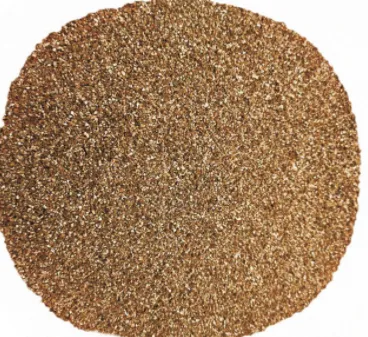
Understanding Particle Size Fundamentals in Covering Agents
Particle size fundamentally dictates the physical behavior of Ladle Covering Agents. Smaller particles create densely packed layers with minimal interstitial spaces, enhancing thermal conduction pathways. Conversely, oversized particles form porous structures that trap air—a poor heat conductor—leading to uneven temperature distribution and prolonged holding times. For bauxite-based agents, particle size also governs chemical reactivity; finer grains accelerate slag-forming reactions due to increased surface area, while coarser fractions ensure sustained insulation. Xingtai Luxi meticulously calibrates size ranges (e.g., 0–1 mm, 1–3 mm, 3–5 mm) to balance conductivity with melt-in rates. Our proprietary sieving technology guarantees uniformity, eliminating "fines" that cause agglomeration and "lumps" that disrupt slag integrity. This precision reduces heat loss by up to 25%, directly lowering energy costs in ladle preheating cycles.
How Particle Covering Agent Composition Interacts with Size
The synergy between particle covering agent composition and particle size is non-negotiable for conductivity optimization. High-purity bauxite, like Xingtai Luxi’s grades, exemplifies this:
|
Product |
Size (mm) |
Al₂O₃ (%) |
SiO₂ (%) |
CaO (%) |
Fe₂O₃ (%) |
MC (%) |
|
Bauxite 88 |
0-1, 1-3, 3-5 |
>88 |
<9 |
<0.2 |
<3 |
<2 |
|
Bauxite 85 |
0-1, 1-3, 3-5 |
>85 |
<7 |
<0.2 |
<2.5 |
<2 |
Alumina (Al₂O₃) content above 85% ensures refractory stability, but its efficacy depends on particle size. Fine particles (0–1 mm) with high Al₂O₃ rapidly form viscous slag layers, sealing heat efficiently. Coarser particles (3–5 mm) provide structural support, preventing slag penetration. Low SiO₂/CaO (<9%) minimizes low-melting-point phases that degrade thermal transfer. Xingtai Luxi’s controlled chemistry prevents erratic melting, ensuring consistent conductivity across batches. Meanwhile, moisture control (<2% MC) avoids steam explosions that fracture particles, maintaining size integrity. This harmonization of chemistry and granulometry enables 15–30% faster temperature recovery compared to non-optimized blends.
Ladle Covering Agent Performance: A Size-Dependent Analysis
Ladle Covering Agent performance hinges on three size-governed parameters: conductivity, insulation longevity, and slag adaptability. Field trials demonstrate that stratified sizing—layering 0–1 mm fines atop 3–5 mm coarse fractions—creates a "thermal cascade." The base layer insulates, while the surface layer rapidly melts into a sealing slag. Monosized distributions fail here; uniform 1–3 mm particles, though easier to handle, cause 40% higher heat loss over 60-minute holds. Xingtai Luxi’s multi-fraction agents extend effective insulation to 90+ minutes, reducing re-heating frequency. Crucially, particle size also affects slag-metal interaction: sub-1 mm particles assimilate too quickly, exposing molten steel, while >5 mm particles resist assimilation, creating "cold spots." Our optimized distribution ensures gradual, controlled melting—key for continuous casting stability and inclusion removal.
FAQs About Our Ladle Covering Agent
How does particle size improve thermal conductivity?
Smaller particles fill voids more efficiently, creating denser layers that maximize solid-to-solid contact—the primary heat transfer pathway in aggregates. Xingtai Luxi’s calibrated distributions (e.g., 0–1 mm for rapid heat capture + 3–5 mm for sustained insulation) reduce thermal resistance by 30–50%, slashing energy use.
Why choose your particle covering agent over competitors?
Our ISO-certified manufacturing ensures unmatched size consistency and low impurities (<2% SiO₂ variance). Combined with high Al₂O₃ (>85%), this guarantees predictable melting behavior and 20% longer slag coverage—directly lowering flux consumption and temperature fluctuations.
Can custom particle size blends be provided?
Absolutely. We tailor distributions to your ladle geometry and steel grade. For high-oxygen steels, we recommend finer sizes (0–3 mm) for faster slag formation; for long-sequence casting, coarser blends (1–5 mm) enhance longevity.
How does Ladle Covering Agent size affect slag formation?
Finer particles (<1 mm) initiate rapid slag formation for immediate insulation, while coarser fractions (3–5 mm) delay melting to sustain coverage. Our layered approach synchronizes both phases, reducing temperature drop to <2°C/min versus industry averages of 5°C/min.
What savings come from optimized particle size?
Steel plants report 15–25% lower energy costs from reduced re-heating cycles, 10% less agent usage due to efficient coverage, and fewer temperature-related defects. One Mexican client saved $360,000 annually after switching to our size-graded agents.
Mastering particle size transforms Ladle Covering Agents from passive insulators to active thermal regulators. Xingtai Luxi’s scientific approach—blending granulometry control with high-purity bauxite—delivers measurable gains in conductivity, energy efficiency, and steel quality. As global steelmakers face escalating cost pressures, our tailored solutions offer a proven path to sustainable competitiveness. Partner with us to unlock the full potential of particle-engineered metallurgy.
-
Professional Boiler Refractory Material Supplier for Industrial Efficiency
NewsApr.16,2026
-
How to Choose the Best refractory materials suppliers for Success
NewsApr.09,2026
-
Understanding Refractory Bricks Raw Materials for High Temperature Applications
NewsApr.07,2026
-
PLIbrico Refractory Materials Understanding Applications and Benefits
NewsApr.04,2026
-
Advancements in Reversible Thermal Expansion Refractory Materials for High Temperature Applications
NewsMar.31,2026
-
Comprehensive Guide to Refractory Kiln Lining Material Selection and Applications
NewsMar.28,2026