
Sep . 08, 2025 15:46 Back to list
Graphite Nucleation Mechanisms in Cast Fe-C Alloy
The intricate dance of carbon atoms within molten metal holds the key to superior cast iron properties. Graphite nucleation – the initial formation of stable carbon clusters – fundamentally dictates the microstructure, mechanical strength, and performance of Fe-C Alloy components. Mastering this process is paramount for foundries seeking consistent quality, reduced defects, and enhanced product value. Xingtai Luxi Environmental Protection Technology Co., Ltd., established in 2013 and a leading force in China's metallurgical materials sector, leverages cutting-edge manufacturing to provide solutions that directly optimize graphite nucleation. Located in the Longgang Economic Development Zone, Xingtai City, Hebei Province, our 60-acre facility spans 130,000 square meters and employs over 100 dedicated professionals. Our commitment to excellence is underscored by ISO9001 certification, ensuring that every batch of our flagship product, the GPC recarburizer, delivers unmatched quality. This premium material, characterized by its strong carbonization ability, low nitrogen content, uniform particle size, and high absorptivity, is engineered to precisely control nucleation events within Fe-C Alloy melts. By accelerating carbon dissolution, minimizing detrimental nitrogen, and ensuring uniform dispersion, our recarburizer empowers steel and foundry enterprises globally – including esteemed partners in South Korea, Japan, Italy, Mexico, and Southeast Asia – to achieve superior microstructures, reduce production cycles, and realize significant cost savings. Let's delve into the science of nucleation and how our advanced materials transform it.
Understanding Graphite Nucleation Dynamics in Fe-C Alloy
Graphite nucleation within a solidifying Fe-C Alloy is a complex phenomenon governed by thermodynamics, kinetics, and the presence of potent substrates. During cooling, carbon atoms supersaturate the molten iron. For graphite flakes or spheroids to form, these atoms must overcome an energy barrier to cluster into stable nuclei. Heterogeneous nucleation predominates, where impurities, intentionally added inoculants, or undissolved carbon particles act as catalytic surfaces, reducing the energy required compared to homogeneous nucleation in the pure melt. Key factors influencing nucleation efficiency include:
Undercooling Degree: The temperature drop below the equilibrium graphite formation point significantly impacts nucleation rate and type (flake vs. spheroidal). Excessive undercooling favors undesired carbide formation (chill).
Melt Chemistry: Trace elements like S, O, Al, Ti, and crucially N, profoundly affect interfacial energies between potential nuclei and the melt. High nitrogen, for instance, can poison nucleation sites.
Availability and Potency of Nucleation Sites: The density, size distribution, chemical composition, and crystallographic compatibility of suspended particles (like sulfides, oxides, nitrides, or carbonaceous materials) determine their effectiveness as nuclei. Our GPC recarburizer is designed to provide optimal, highly potent sites.
The goal in cast iron production is to achieve a high density of uniformly distributed, effective nucleation sites. This ensures the formation of fine, uniformly distributed graphite (either A-type flake or well-formed spheroids in ductile iron), minimizing undercooling, preventing chill, and maximizing mechanical properties like tensile strength, ductility, and machinability. The inherent quality and composition of the carbon source added to the melt – such as our precisely engineered recarburizer – become critical variables directly influencing this nucleation landscape by introducing favorable particles and controlling detrimental tramp elements.
The Critical Role of Fe-C Composite Pellets in Nucleation Enhancement
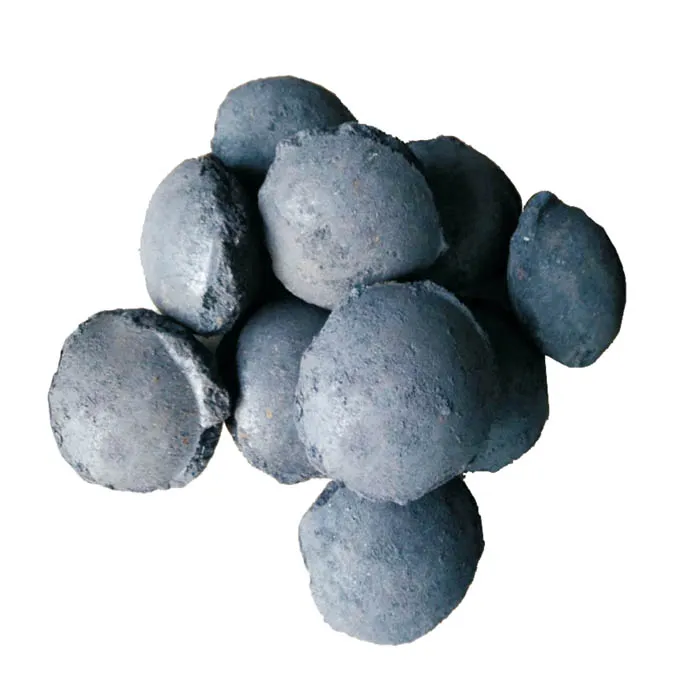
Fe-C composite pellets represent a significant advancement in carbon additive technology, specifically engineered to overcome limitations of traditional materials like petroleum coke or coal-based carbons. Unlike simple mixtures, these pellets integrate fine iron particles within a high-purity carbon matrix. This unique structure offers profound advantages for graphite nucleation in Fe-C Alloy:
Enhanced Nucleation Potency: The intimate contact between the iron (Fe) and carbon (C) within each pellet creates countless micro-interfaces. These Fe-C interfaces possess crystallographic characteristics highly compatible with the emerging graphite lattice, acting as exceptionally potent heterogeneous nucleation sites. This significantly lowers the activation energy barrier for graphite formation compared to pure carbon particles floating in the melt.
Accelerated Dissolution and Uniform Dispersion: The composite structure allows the carbon to dissolve more rapidly and uniformly into the molten iron. As the iron particles within the pellet melt, they release finely divided carbon directly into the surrounding liquid metal. This rapid dissolution minimizes the time carbon spends as large, potentially problematic undissolved chunks and promotes the creation of a vast number of small, effective nucleation points throughout the melt volume. Our GPC recarburizer leverages this composite principle for superior performance.
Mitigation of Fading: Nucleation potency often decreases over time after inoculation due to the dissolution or deactivation of nuclei (fading). Fe-C composite pellets, by continuously releasing fresh carbon and providing new Fe-C interfaces during dissolution, help sustain a higher level of active nucleation sites for longer durations within the holding furnace or ladle.
Reduced Tramp Element Impact: High-quality pellets, such as those produced under our stringent ISO9001 regime, minimize impurities like Sulfur (S), Phosphorus (P), and particularly Nitrogen (N). Low nitrogen is vital as nitrogen can form nitrides that poison potential nucleation sites. Our product specifications ensure minimal interference.
Optimized Fe-C Recarburizer Parameters for Superior Nucleation:
|
Parameter |
Value |
Importance for Nucleation & Performance |
|
Fe (%) |
≥ 40 |
Provides essential iron matrix for Fe-C interfaces, enhancing nucleation potency and dissolution kinetics. |
|
C (%) |
≥ 25 |
High, readily available carbon source essential for graphite formation and achieving target carbon equivalent. |
|
SiO₂ (%) |
≤ 10 |
Low silica minimizes slag formation, ensuring cleaner melts and efficient carbon transfer/nucleation. |
|
S (%) |
≤ 0.4 |
Critical low level prevents excessive sulfide formation which can interfere with graphite shape and nucleation efficiency. |
|
P (%) |
≤ 0.1 |
Low phosphorus minimizes embrittlement risks and avoids complex phosphide formation near nuclei. |
The consistent quality and optimized composition of our Fe-C composite pellets directly translate to predictable, enhanced nucleation, leading to superior cast iron microstructures and mechanical properties batch after batch.
Advantages of Spherical Alloy Materials in Casting Applications
The physical morphology of additive materials plays a crucial, often underappreciated, role in metallurgical processes. Spherical alloy materials, such as the spherical GPC recarburizer produced by Xingtai Luxi, offer distinct and significant advantages over irregularly shaped counterparts (lumps, flakes, angular grains) in Fe-C Alloy production, directly impacting nucleation efficiency and overall melt quality:
Maximized Surface Area & Flowability: Spheres possess the highest possible surface-area-to-volume ratio for a given particle size among geometric shapes. This maximizes the contact area between the additive and the molten metal, accelerating heat transfer and dissolution kinetics. Furthermore, spherical particles flow like ball bearings, ensuring excellent metering and feeding consistency from hoppers into the furnace or ladle, preventing bridging and enabling precise dosage control critical for consistent carbon addition and nucleation outcomes.
Uniform Particle Size Distribution: Advanced manufacturing allows for tight control over the size distribution of spherical alloy materials. This uniformity is vital for consistent dissolution rates and melt behavior. Irregular materials have varying surface areas and densities, leading to inconsistent sinking/floating rates and dissolution times. Uniform spheres dissolve predictably, promoting a steady release of carbon and potent nucleation sites (like Fe-C interfaces) into the melt, contributing to a homogeneous nucleation environment. Our GPC recarburizer exemplifies this uniformity.
Reduced Dust Generation and Losses: The smooth, closed surface of spheres generates significantly less fine dust during handling, transportation, and feeding compared to angular materials. This minimizes material loss (improving yield), reduces workplace dust hazards, and prevents unwanted carbon fines from being carried off by fume extraction systems before they can contribute to the melt or nucleation process.
Enhanced Absorptivity and Yield: The combination of rapid dissolution (due to high surface area and good wetting) and minimal losses (low dust) leads to significantly higher carbon recovery or absorptivity. More of the purchased carbon ends up in the final Fe-C Alloy, directly boosting cost-efficiency. High absorptivity also means less additive is needed to achieve the target carbon level, reducing overall melt treatment costs and potential slag volume. This high yield is a cornerstone of our GPC recarburizer's value proposition.
Improved Dispersion and Nucleation Uniformity: As spheres dissolve uniformly, they release carbon and potential nucleation sites evenly throughout the melt volume they occupy. This promotes a more homogeneous distribution of nucleation events, leading to finer and more uniform graphite structures in the final casting, which translates directly to improved and consistent mechanical properties.
The adoption of spherical alloy materials like our premium recarburizer represents a move towards precision metallurgy, where controlled morphology enhances process control, efficiency, product quality, and cost-effectiveness, all contributing to optimized graphite nucleation.
FAQs About Our Premium Fe-C Products
What specific advantages do your Fe-C composite pellets offer over standard recarburizers?
Our Fe-C composite pellets are engineered for superior performance. The integrated iron matrix within the carbon creates highly potent Fe-C interfaces that act as exceptional nucleation sites, promoting finer graphite formation and reducing undercooling risk. This directly translates to stronger, more consistent castings. Furthermore, their structure ensures rapid, near-complete dissolution (high absorptivity >95%), minimizing undissolved carbon and slag. Combined with inherently low nitrogen content (<100ppm typical) to prevent nitrogen embrittlement and strict control of S and P (≤0.4% and ≤0.1% respectively), they deliver cleaner, tougher steel and iron while significantly shortening your production cycle. You achieve target carbon faster and with greater reliability.
How does your product directly improve the properties of the final Fe-C Alloy?
By optimizing the critical graphite nucleation phase, our GPC recarburizer fundamentally enhances the microstructure of the Fe-C Alloy. The high density of effective nucleation sites promotes the formation of finer, more uniformly distributed graphite (flakes or spheroids). This refines the overall matrix, leading to measurable improvements in tensile strength, yield strength, ductility (elongation), and impact toughness. Additionally, the low nitrogen content significantly reduces the risk of nitrogen-induced embrittlement and porosity. The result is castings or steel products with superior mechanical performance, enhanced machinability, reduced scrap rates due to defects like chill or shrinkage, and overall greater reliability in service.
Why should we choose spherical alloy materials for our casting process?
Choosing spherical alloy materials like our recarburizer delivers tangible process and quality benefits. The spherical shape ensures excellent flowability, eliminating bridging in feeders for precise, consistent dosing. Their uniform size and high surface area accelerate dissolution, leading to faster carbon pickup (strong carbonization ability), shorter holding times, and increased furnace throughput. Crucially, the uniform dissolution promotes even distribution of carbon and nucleation sites, resulting in a more homogeneous melt and consistent graphite structure throughout the casting. This morphology also drastically reduces dust generation during handling, improving yield, workplace cleanliness, and operator safety compared to irregular carbons.
How do your Fe-C composite pellets ensure consistently low nitrogen content?
Achieving low nitrogen content is core to our manufacturing process. We meticulously select and pre-treat high-purity raw materials inherently low in nitrogen compounds. Our proprietary processing technology, conducted in controlled environments, minimizes nitrogen pickup during production. Crucially, we employ advanced high-temperature graphitization (>2500°C) in specialized furnaces. This intense heat effectively volatilizes and removes residual nitrogenous compounds, ensuring the final spherical alloy materials consistently meet our stringent specification of ≤0.1% N (typically much lower). Rigorous batch testing via combustion analysis guarantees this critical parameter before shipment, protecting your metal from nitrogen brittleness.
What makes your Fe-C alloy products the most cost-effective solution?
While the initial price is competitive, the true cost-effectiveness of our Fe-C composite pellets lies in their performance efficiency. The high absorptivity (often exceeding 95%) means nearly all the carbon you pay for enters the melt, drastically reducing consumption compared to lower-yield alternatives. The strong carbonization ability shortens treatment times, boosting furnace productivity. Reduced nitrogen and impurities lower downstream processing costs and scrap rates. The uniform particle size of our spherical alloy materials ensures predictable dissolution and minimizes slag. Combined with fewer defects, longer tool life during machining, and superior final product quality, our recarburizer delivers a significantly lower total cost per ton of high-quality cast iron or steel produced.
Partner with Xingtai Luxi for Superior Metallurgical Solutions
Mastering graphite nucleation is not just a scientific pursuit; it's the foundation of producing high-performance, cost-effective cast iron and steel. Xingtai Luxi Environmental Protection Technology Co., Ltd. is committed to providing the advanced materials that make this mastery achievable. Our ISO9001-certified GPC recarburizer, available in optimized Fe-C composite pellet and spherical alloy material forms, is engineered with precision to deliver strong carbonization ability, low nitrogen content, uniform particle size, and high absorptivity. We invite foundries and steel plants worldwide to experience the difference that scientifically engineered carbon additives can make. Contact us today to discuss how our solutions can optimize your Fe-C Alloy processes, enhance your product quality, and improve your bottom line. Let's build stronger metal, together.
-
Professional Boiler Refractory Material Supplier for Industrial Efficiency
NewsApr.16,2026
-
How to Choose the Best refractory materials suppliers for Success
NewsApr.09,2026
-
Understanding Refractory Bricks Raw Materials for High Temperature Applications
NewsApr.07,2026
-
PLIbrico Refractory Materials Understanding Applications and Benefits
NewsApr.04,2026
-
Advancements in Reversible Thermal Expansion Refractory Materials for High Temperature Applications
NewsMar.31,2026
-
Comprehensive Guide to Refractory Kiln Lining Material Selection and Applications
NewsMar.28,2026