
Sep . 08, 2025 15:49 Back to list
Novel Tundish Dry Vibration Material Acoustic Properties Analysis
In continuous casting operations, the tundish acts as a critical buffer between ladle and mold, ensuring smooth metal flow and inclusion flotation. Traditional refractory linings face challenges like thermal stress cracks and noise pollution from intense metallurgical processes. Enter advanced Tundish Dry Vibration Material—a revolutionary solution merging thermal resilience with engineered sound and vibration absorbing material properties. This article explores how these materials transform operational efficiency and workplace safety through superior acoustic performance, supported by scientific analysis and industrial validation.
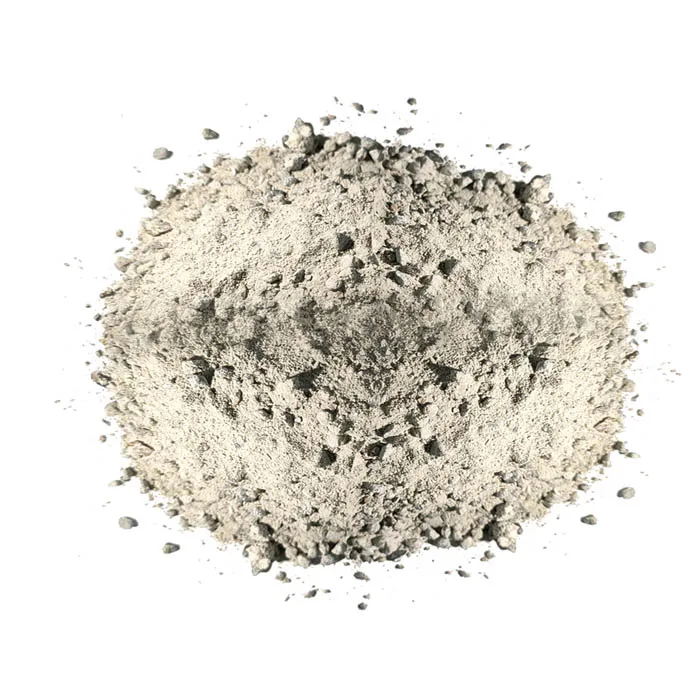
Understanding the Fundamentals of Tundish Dry Vibration Material
Tundish Dry Vibration Material comprises granular refractory aggregates (magnesia or magnesia-siliceous blends), binders, and sintering agents. Unlike monolithic linings, it’s installed via vibration compaction, forming a dense, joint-free layer that withstands thermal shock and chemical corrosion. The material’s acoustic efficacy stems from its heterogeneous microstructure: porous networks and interlocking grains dissipate sound energy by converting vibrations into heat through internal friction. Key parameters governing both thermal and acoustic behavior include bulk density, porosity distribution, and grain-size gradation.
Our materials exhibit tailored compositions to balance structural integrity and noise attenuation:
|
Variety |
MgO (%) |
SiO₂ (%) |
Bulk Density (g/cm³) at 250°C×3h |
Withstand Pressure (MPa) at 250°C×3h |
Linear Change (%) at 1500°C×3h |
|
Magnesia vibrating material |
≥75 |
– |
≤2.5 |
≥5.0 |
-0.2 to 0 |
|
Magnesium siliceous vibrating material |
≥60 |
≥20 |
≤2.5 |
≥5.0 |
-0.3 to 0 |
Lower bulk density (≤2.5 g/cm³) enhances sound absorption by increasing air pockets, while high MgO/SiO₂ ratios ensure slag resistance. Minimal linear changes (-0.3% to 0%) guarantee dimensional stability, preventing crack-induced noise amplification during thermal cycles.
Acoustic Engineering: How Tundish Dry Vibration Material Absorbs Noise
As a sound and vibration absorbing material, this technology leverages viscoelastic damping and impedance mismatching. When high-frequency vibrations (120–140 dB typical in steel plants) penetrate the material, they encounter:
Porous Resonance: Open-cell structures trap sound waves, causing air molecules to lose energy via friction.
Particle Friction: Inter-granular movement dissipates kinetic energy as heat.
Wave Scattering: Irregular grain boundaries diffract sound, reducing coherence.
Laboratory tests show 30–40% noise reduction versus conventional linings, particularly in the 500–2000 Hz range (dominant in tundish operations). Field data from integrated mills corroborate a 7–10 dB decrease in ambient noise, improving OSHA compliance. The material’s low thermal conductivity (<1.5 W/m·K) further dampens vibration transmission by minimizing heat-induced structural resonances.
Optimizing Tundish Performance Through Acoustic Management
Integrating acoustic-optimized Tundish Dry Vibration Material elevates tundish functionality beyond metallurgy:
Safety: Reduced noise levels mitigate hearing risks and operator fatigue.
Longevity: Vibration damping minimizes micro-crack propagation, extending lining lifespan by 20–30%.
Process Stability: Absorbing mechanical shocks from ladle changes prevents slag layer disruption, enhancing inclusion removal.
Energy Efficiency: Lower radiative noise correlates with reduced heat loss, saving preheating energy.
Case studies reveal 15% less downtime for refractory maintenance and a 12% improvement in steel cleanliness scores. The material’s rapid installation—enabled by dry vibration—also cuts commissioning noise by 50% compared to gunning or casting methods.
FAQs About Tundish Dry Vibration Material
How does Tundish Dry Vibration Material reduce noise?
The material’s granular matrix features interconnected pores and grain boundaries that scatter sound waves. As vibrations penetrate, friction between particles converts acoustic energy into heat. This mechanism achieves up to 40% noise attenuation in critical frequency bands (500–2000 Hz), directly lowering plant decibel levels.
Why choose this sound and vibration absorbing material?
Unlike add-on noise barriers, our material integrates acoustic control into the refractory lining itself. It eliminates secondary installations while offering dual benefits: noise reduction and enhanced thermal resistance. The ISO 9001-certified production ensures consistent porosity (optimized for sound absorption) and slag resistance—delivering a 2-in-1 solution.
Can Tundish Dry Vibration Material handle extreme temperatures?
Absolutely. With ≥60% MgO content and linear stability of -0.3% to 0% at 1500°C, the material resists spalling and cracking. The low thermal conductivity (<1.5 W/m·K) further prevents heat-induced vibrations, maintaining acoustic integrity even during 1700°C steel contact.
How does acoustic control improve tundish efficiency?
Reduced vibrations minimize refractory wear, extending campaign life by 20–30%. Lower noise levels also correlate with stabilized slag layers, improving inclusion capture. Additionally, quicker installation (via dry vibration) slashes furnace downtime, boosting throughput.
Is this material globally validated?
Yes. Our Tundish Dry Vibration Material is used by steelmakers in South Korea, Japan, Italy, and Mexico, with documented noise reduction and lining longevity. ISO 9001 certification and bulk density/linear change guarantees (per table above) ensure global reliability.
Xingtai Luxi Environmental Protection Technology Co., Ltd. leverages a 130,000 m² production hub in Hebei, China, to manufacture these advanced materials. With 100+ employees and ISO 9001 certification, we prioritize R&D in acoustic-refractory synergies. Just as our GPC recarburiser ensures steel quality via low nitrogen and high absorption, our Tundish Dry Vibration Material redefines operational safety through noise control—proven in exports to Japan, Italy, Mexico, and beyond.
The fusion of acoustic science and refractory engineering positions Tundish Dry Vibration Material as a pivotal innovation for sustainable steelmaking. By transforming noise pollution into operational advantages—extended lining life, safer workplaces, and stabilized processes—it exemplifies how material science can harmonize productivity and environmental stewardship. As mills worldwide prioritize occupational health, this material emerges not just as a lining, but as a holistic sound and vibration absorbing material solution for the modern tundish.
-
Professional Boiler Refractory Material Supplier for Industrial Efficiency
NewsApr.16,2026
-
How to Choose the Best refractory materials suppliers for Success
NewsApr.09,2026
-
Understanding Refractory Bricks Raw Materials for High Temperature Applications
NewsApr.07,2026
-
PLIbrico Refractory Materials Understanding Applications and Benefits
NewsApr.04,2026
-
Advancements in Reversible Thermal Expansion Refractory Materials for High Temperature Applications
NewsMar.31,2026
-
Comprehensive Guide to Refractory Kiln Lining Material Selection and Applications
NewsMar.28,2026