
Sep . 02, 2025 15:41 Back to list
Optimizing Steelmaking With Low Nitrogen GPC Recarburisers
Steel remains the backbone of modern infrastructure, and achieving precise metallurgical properties is paramount. A critical stage in this process is recarburization – reintroducing carbon lost during high-temperature operations to meet stringent grade specifications. Traditional carbon additives often introduce detrimental impurities, compromising steel quality and production efficiency. This is where GPC recarburisers, particularly those engineered for low nitrogen content, revolutionize the process. Leveraging premium graphite structures, these advanced materials offer unparalleled performance, ensuring steelmakers achieve superior results while optimizing costs and environmental impact.
Xingtai Luxi Environmental Protection Technology Co., Ltd., established in 2013 and headquartered in the Longgang Economic Development Zone, Xingtai City, Hebei Province, China, stands at the forefront of this innovation. Operating from a significant 60-acre facility with 130,000 square meters of construction space and employing over 100 dedicated professionals, the company specializes in high-performance metallurgical materials. Rigorous quality control, certified under ISO9001, underpins the production of their flagship product: the Low Nitrogen GPC Recarburiser. This product is distinguished by its exceptional purity, featuring a high fixed carbon content, minimal impurities like sulfur and ash, critically low nitrogen levels, uniform particle size distribution, and outstanding carbon yield. These attributes translate directly into tangible benefits for steel producers: faster achievement of target carbon levels shortening production cycles, significant reduction in nitrogen-induced brittleness enhancing product toughness and plasticity, ease of dissolution ensuring uniform carbon dispersion, and high absorption rates leading to substantial cost savings. Recognized by leading domestic steel and foundry enterprises, Xingtai Luxi's GPC recarburisers have also gained significant international traction, exporting to South Korea, Japan, Italy, Mexico, and Southeast Asia.
The core excellence of Xingtai Luxi's product is defined by its stringent specifications:
|
Parameter |
Specification |
Benefit for Steelmaking |
|
Carbon (C) |
≥ 98.5% |
Provides high carbon potential, ensuring efficient recarburization with minimal addition. |
|
Sulfur (S) |
≤ 0.05% |
Prevents sulfur-induced hot shortness and embrittlement, maintaining steel integrity. |
|
Ash Content |
≤ 0.7% |
Minimizes slag formation and unwanted inclusions, improving steel cleanliness and yield. |
|
Volatiles |
≤ 0.8% |
Reduces smoke and fuming during addition, enhancing workplace safety and efficiency. |
|
Nitrogen (N) |
≤ 300 PPM |
Crucially low nitrogen prevents nitrogen embrittlement, boosting toughness & ductility. |
|
Moisture |
≤ 0.5% |
Eliminates steam explosions (spitting) and hydrogen pickup risks during addition. |
Understanding the Fundamentals of GPC Recarburisers in Steelmaking
Recarburisation is indispensable, especially in Electric Arc Furnace (EAF) and Induction Furnace (IF) operations where intensive oxygen blowing decarburizes the melt. Historically, materials like anthracite coal or petroleum coke were used, but they often carried high levels of sulfur, ash, and critically, nitrogen, alongside inconsistent carbon content and poor absorption yields. This inefficiency led to longer processing times, unpredictable chemistry, increased slag volume, and compromised final steel quality. The advent of Graphitized Petroleum Coke (GPC) recarburisers marked a paradigm shift. GPC is produced by calcining and subsequently graphitizing high-purity petroleum coke at extremely high temperatures (often above 2500°C). This process transforms the amorphous carbon structure into a highly ordered crystalline graphite lattice. The significance of this graphite structure cannot be overstated. Graphite is the thermodynamically stable form of carbon at steelmaking temperatures. When added to molten steel, GPC dissolves rapidly and efficiently because the liquid steel readily "wets" the familiar graphite crystals. This results in significantly higher carbon yields (often exceeding 95%) compared to amorphous carbons. The inherent purity of the raw petroleum coke, coupled with the high-temperature processing, also drastically reduces undesirable elements like sulfur, ash, and volatile matter. Consequently, GPC recarburisers offer steelmakers precise carbon addition, faster dissolution kinetics, minimal slag generation, and cleaner steel. They act as a highly efficient, predictable, and clean carbon source, forming the foundation for producing high-quality steel grades with consistent properties.
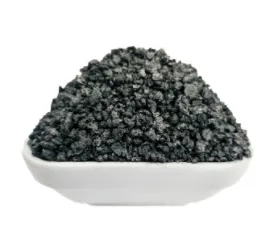
The Critical Role of Graphite Structure in Recarburiser Performance
While the term GPC denotes the base material, the true performance differentiator lies in the nature and quality of the graphite structure within the recarburiser. Not all graphite is created equal. The degree of graphitization, crystal size, orientation, and overall crystallinity profoundly impact how the recarburiser behaves in the harsh environment of molten steel. A highly developed, ordered graphite lattice, as achieved through precise thermal processing like that employed by Xingtai Luxi, offers several key advantages:
Enhanced Dissolution Kinetics: The layered structure of graphite allows molten steel to penetrate between the layers easily. This "wetting" action facilitates rapid breakdown and dissolution of the carbon particles. Amorphous carbons or poorly graphitized materials dissolve more slowly and incompletely, leading to undissolved particles floating in the slag or requiring excessive stirring energy.
Superior Carbon Yield: The rapid and complete dissolution directly translates to higher carbon absorption efficiency. More of the carbon added ends up in the steel, not lost to oxidation or trapped in slag. This high yield is a major cost-saving factor.
Improved Carbon Uniformity: Rapid dissolution ensures the carbon distributes homogenously throughout the melt quickly. This prevents localized areas of high or low carbon concentration, leading to more consistent steel chemistry and properties across the entire heat.
Reduced Oxidation Loss: The dense, stable graphite crystals are inherently less reactive towards oxygen in the furnace atmosphere compared to amorphous carbon particles with higher surface area and reactivity. This minimizes carbon loss through oxidation before it can dissolve into the steel.
Lower Dusting: Well-developed graphite structures contribute to the mechanical strength of the recarburiser particles, reducing fines generation (dusting) during handling and addition. This improves working conditions and material efficiency.
Therefore, investing in a GPC recarburiser specifically engineered for optimal graphite crystallinity is not just about adding carbon; it's about ensuring that carbon integrates efficiently, uniformly, and completely into the melt. The graphite structure is the silent engine driving the superior performance metrics of modern high-grade recarburisers.
Why Low Nitrogen Recarburiser is Non-Negotiable for Premium Steel
Nitrogen is a pervasive and often problematic interstitial element in steel. While small, controlled amounts can be beneficial in some microalloyed steels, uncontrolled or excessive nitrogen pickup is universally detrimental. It leads to nitrogen embrittlement – a phenomenon where dissolved nitrogen atoms lock dislocations within the steel's crystal structure, significantly reducing its toughness, ductility (plasticity), and formability. This manifests as:
Increased susceptibility to brittle fracture, especially at lower temperatures.
Reduced impact strength and fatigue resistance.
Problems in cold forming operations (cracking).
Potential for strain aging embrittlement over time.
Steelmakers strive to minimize dissolved nitrogen levels, particularly for high-grade applications like automotive components, pipelines, deep-drawing sheets, and engineering steels. Nitrogen primarily enters steel from the atmosphere during tapping, teeming, and through additions. While practices like argon stirring help remove nitrogen, introducing it via raw materials is counterproductive. Traditional carbon raisers, especially those derived from coal or standard petroleum coke, can be significant hidden sources of nitrogen, containing levels exceeding 1000 ppm or even higher.
This is where the Low Nitrogen recarburiser becomes essential. Products like Xingtai Luxi's GPC, rigorously controlled to ≤ 300 ppm nitrogen, provide a critical solution. By utilizing a low nitrogen recarburiser, steelmakers achieve:
Reduced Final Nitrogen Content: Directly minimizing the nitrogen load introduced during a critical phase of the process (carbon addition), making downstream degassing more effective and efficient.
Enhanced Toughness and Ductility: Lower dissolved nitrogen directly translates to superior impact properties, elongation, and reduction of area – key indicators of steel quality and performance.
Improved Weldability: High nitrogen levels can adversely affect the Heat-Affected Zone (HAZ) toughness in welded structures. Low nitrogen steel exhibits better weldability characteristics.
Prevention of Aging Embrittlement: Minimizing initial nitrogen content reduces the risk of detrimental strain aging over the product's lifetime.
Consistent Quality for Demanding Grades: Enables reliable production of high-quality, low-nitrogen steel grades required by stringent automotive, energy, and machinery specifications.
Choosing a low nitrogen recarburiser is not merely an option for quality-focused steelmakers; it is a fundamental requirement for producing steel with superior mechanical properties, reliability, and performance in demanding applications. It directly addresses the core challenge of nitrogen embrittlement at its source.
FAQs About Our Low Nitrogen GPC Recarburiser
This section addresses common inquiries from steel producers considering Xingtai Luxi's advanced Low Nitrogen GPC Recarburiser. We aim to clarify its advantages and operational benefits.
What are the primary advantages of your GPC recarburiser?
The core advantages stem from its unique composition: a highly graphite structure ensuring rapid dissolution (>95% yield), critically low nitrogen content (≤300 ppm) preventing embrittlement, exceptional purity (≥98.5% C, low S/Ash) minimizing slag and inclusions, and uniform particle size promoting consistent melting. This combination delivers faster cycle times, superior steel toughness and ductility, improved process control, cleaner steel, and significant overall cost savings through reduced addition rates and improved yield.
How does the graphite structure improve performance?
The engineered crystalline graphite structure is key. Its layered lattice allows molten steel to rapidly "wet" and dissolve the particles far more efficiently than amorphous carbon sources. This translates directly to very high carbon absorption rates (minimizing waste), faster achievement of target carbon levels (reducing tap-to-tap time), and exceptionally uniform carbon distribution throughout the melt, ensuring consistent steel chemistry and properties. The graphite stability also reduces oxidation losses during addition.
Why is low nitrogen critical in my recarburiser?
Nitrogen introduced via the recarburiser dissolves into the steel, causing nitrogen embrittlement. This severely reduces toughness, ductility, and impact resistance, leading to potential brittle fracture and poor performance in service. A low nitrogen recarburiser (≤300 ppm) drastically minimizes this harmful nitrogen pickup at the source, ensuring your final steel achieves the required high levels of toughness and plasticity, essential for demanding applications like automotive parts, pipelines, and structural components. It prevents a major quality defect.
What steel grades benefit most from Low Nitrogen GPC?
Virtually all quality-sensitive grades benefit, especially those requiring high toughness, ductility, and low nitrogen specifications. Key applications include: Ultra-Low Carbon (ULC) steels for automotive deep-drawing, High-Strength Low-Alloy (HSLA) steels, engineering steels, bearing steels, cold heading quality (CHQ) wires, seamless pipes, and high-grade casting applications. Any process using EAF, IF, or ladle furnace recarburization where final nitrogen control is paramount will see significant quality improvements.
How does your GPC recarburiser reduce costs?
Cost savings are multi-faceted: Exceptionally high carbon yield (>95%) means less recarburiser is needed per ton of steel compared to lower-grade alternatives. Rapid dissolution shortens furnace time, lowering energy consumption and increasing throughput. Reduced slag volume from low ash/sulfur means less flux consumption, lower refractory wear, and higher metal yield. Minimized nitrogen-related defects drastically reduce scrap rates and costly rework. Consistent quality improves overall process efficiency and product reliability, translating to long-term operational savings and enhanced competitiveness.
Optimizing the recarburization step is no longer just about adding carbon; it's about strategically enhancing the entire steelmaking process. Xingtai Luxi Environmental Protection Technology's Low Nitrogen GPC Recarburiser, built upon a foundation of high-purity, optimally structured graphite and rigorously controlled ultra-low nitrogen content, represents a significant technological leap. It directly addresses the core challenges steelmakers face: achieving precise carbon control efficiently, safeguarding against detrimental nitrogen embrittlement, ensuring uniformity, and maximizing yield. The result is steel with superior mechanical properties – enhanced toughness, ductility, and consistency – produced faster and more cost-effectively. By integrating this advanced material into their operations, steel producers globally can elevate product quality, boost competitiveness, and meet the increasingly stringent demands of modern manufacturing. Xingtai Luxi remains committed to innovation and quality, empowering the steel industry to forge a stronger, more efficient future. Contact us to discover how our Low Nitrogen GPC Recarburiser can transform your steelmaking results.
-
Professional Boiler Refractory Material Supplier for Industrial Efficiency
NewsApr.16,2026
-
How to Choose the Best refractory materials suppliers for Success
NewsApr.09,2026
-
Understanding Refractory Bricks Raw Materials for High Temperature Applications
NewsApr.07,2026
-
PLIbrico Refractory Materials Understanding Applications and Benefits
NewsApr.04,2026
-
Advancements in Reversible Thermal Expansion Refractory Materials for High Temperature Applications
NewsMar.31,2026
-
Comprehensive Guide to Refractory Kiln Lining Material Selection and Applications
NewsMar.28,2026