
Sep . 02, 2025 15:44 Back to list
Tundish Dry Vibration Material: Unleashing Advanced Sound Insulation
The relentless roar of molten metal, the clanging of machinery, and the constant hum of industrial processes define the steelmaking environment. Within this cacophony, the tundish stands as a critical vessel, the last guardian of molten steel quality before it enters the mold for solidification. Protecting this vessel and optimizing its performance is paramount. Enter Tundish Dry Vibration Material (TDVM), a technological marvel that not only safeguards the tundish lining but also introduces a game-changing benefit: advanced sound and vibration absorbing material properties. This synergy of protection and acoustic control represents a significant leap forward in tundish operation efficiency and workplace environment.
For steelmakers seeking to enhance operational efficiency, prolong tundish campaign life, improve steel quality, and create a safer, less disruptive workplace, understanding the capabilities of modern Tundish Dry Vibration Material is essential. Xingtai Luxi Environmental Protection Technology Co., Ltd., a dedicated force in metallurgical material innovation, stands at the forefront of developing and supplying these high-performance solutions, integrating sound insulation as a core benefit.
Xingtai Luxi Environmental Protection Technology Co., Ltd.: Commitment to Metallurgical Excellence
Established in 2013 and strategically located in the Longgang Economic Development Zone, Xingtai City, Hebei Province, China, Xingtai Luxi Environmental Protection Technology Co., Ltd. has rapidly grown into a respected professional metallurgical material manufacturer. Operating from a significant 60-acre facility with 130,000 square meters of construction space and employing over 100 skilled professionals, the company is built on a foundation of quality and innovation.
Their commitment to excellence is underscored by ISO9001 quality management system certification, ensuring rigorous standards govern every stage of production. While renowned for their premium GPC recarburizer – celebrated for its strong carbonization ability, low nitrogen content, uniform particle size, and high absorptivity – Xingtai Luxi's expertise extends deeply into refractory solutions critical for the steelmaking process. Their products have earned trust domestically across numerous steel and foundry enterprises and internationally, exporting to markets including South Korea, Japan, Italy, Mexico, and Southeast Asia. This global recognition stems from a relentless focus on delivering materials that solve real-world metallurgical challenges, such as the need for durable, high-performance tundish linings with added benefits like noise reduction.
Understanding the Core: What is Tundish Dry Vibration Material?
The tundish is subjected to extreme thermal cycling, chemical attack from molten steel and slag, and significant mechanical stress. Traditional lining methods, like bricks or wet gunning mixes, often present challenges: complex installation, lengthy drying/curing times, potential for moisture-related defects (like explosions during pre-heating), and limitations in forming complex shapes or achieving perfect conformity to the tundish shell. Tundish Dry Vibration Material emerged as a superior alternative.
Tundish Dry Vibration Material is a specially formulated refractory mixture supplied in a dry, granular state. Its composition primarily revolves around high-purity magnesia (MgO) or a blend of magnesia and silica (MgO-SiO₂), along with carefully selected additives and binders. The "dry" aspect is crucial – it contains minimal moisture, eliminating the lengthy drying times and associated risks of steam explosions inherent in wet mixes. The "vibration" refers to the installation method: the dry material is poured into the tundish cavity surrounding pre-positioned patterns (forming the molten steel flow channels) and then densely compacted using high-frequency vibrators.
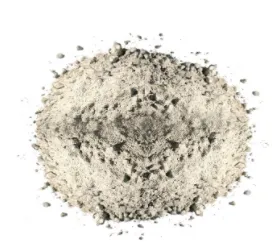
This vibration process is key. It packs the granular particles tightly together, expelling air voids and creating a monolithic lining structure with exceptional integrity, density, and strength before any heating occurs. Once the tundish is preheated, the heat activates the chemical binders within the Tundish Dry Vibration Material, sintering the particles into a cohesive, high-strength refractory mass. This results in a lining that offers:
Excellent Thermal Stability: Resists spalling and cracking under rapid temperature changes.
Superior Resistance to Slag and Metal Erosion: Maintains lining integrity longer, extending campaign life.
Excellent Volume Stability: Minimal shrinkage or expansion during heating and service.
Perfect Conformity: Fills the entire cavity uniformly, creating a seamless lining that minimizes heat loss and protects the steel shell.
Simplified Installation: Faster application compared to bricking, requiring less specialized labor.
The inherent density and monolithic nature achieved through vibration compaction lay the foundation for its secondary, yet increasingly valuable, property: acting as an effective sound and vibration absorbing material.
The Science of Silence: How TDVM Functions as a Sound and Vibration Absorbing Material
Noise pollution in steel plants, particularly around continuous casting platforms, is a significant environmental and occupational health challenge. Sources are numerous: the turbulent flow of molten steel, impact during ladle changes, electromagnetic stirring, cooling water sprays, and machinery vibrations. These vibrations travel through structures, including the tundish itself, radiating noise and potentially causing fatigue.
Modern Tundish Dry Vibration Material is engineered not just for refractory performance but also to dampen this acoustic energy. How does a dense refractory become a sound and vibration absorbing material?
Mass Law Principle: Simply put, heavy and dense materials are harder for sound waves to vibrate. The high bulk density inherent in properly compacted Tundish Dry Vibration Material (typically ≥ 2.5 g/cm³) provides significant mass, acting as a barrier to airborne sound transmission. Sound energy hitting the tundish lining is partially reflected due to the material's density and stiffness.
Internal Friction/Damping: This is where the microstructure plays a vital role. While dense, the sintered matrix of the Tundish Dry Vibration Material consists of countless grain boundaries and micro-pores (even in a well-compacted material). As sound waves or structural vibrations attempt to propagate through this complex granular structure, energy is dissipated as heat through friction at these internal interfaces. The material essentially converts vibrational energy into negligible amounts of thermal energy.
Constrained Layer Damping (CLD) Analogy: The monolithic Tundish Dry Vibration Material lining, tightly bonded to the steel tundish shell after sintering, functions similarly to a constrained damping layer. Vibrations in the steel shell are transferred into the refractory layer. The refractory's inherent damping properties (its ability to dissipate energy internally) then absorb and dissipate a significant portion of this vibrational energy, reducing the amplitude of vibrations transmitted through the shell and radiated as noise.
Reduction of Shell Ringing: A bare or thinly lined steel tundish shell can act like a bell, amplifying structural vibrations into loud ringing noises. The thick, dense, and dampening layer of Tundish Dry Vibration Material effectively "de-tunes" this shell, drastically reducing its propensity to ring.
The combination of high mass and significant internal damping transforms the tundish lining from a potential noise amplifier into an effective sound and vibration absorbing material, contributing to a measurable reduction in ambient noise levels around the casting platform. This leads to a quieter, safer, and more comfortable working environment, aiding communication and reducing operator fatigue.
Optimizing Tundish Performance with Advanced TDVM
Integrating Tundish Dry Vibration Material with enhanced sound and vibration absorbing material properties delivers tangible benefits beyond just noise reduction, significantly optimizing overall tundish performance:
Extended Campaign Life: The primary refractory properties – erosion resistance, thermal stability, and volume stability – directly translate to longer lining life. Reduced spalling and wear mean fewer tundish changes, maximizing production uptime and reducing refractory consumption per ton of steel. Xingtai Luxi's formulations target optimal performance indices (see Table 1) to ensure longevity.
Improved Steel Quality: A uniform, monolithic lining free from joints or cracks minimizes the risk of slag entrapment or exogenous inclusions originating from the lining itself. Consistent pre-heating characteristics also contribute to more stable steel temperature control in the tundish.
Enhanced Thermal Efficiency: The perfect conformity and density of the Tundish Dry Vibration Material lining provide superior insulation compared to bricked linings, reducing heat loss from the molten steel. This contributes to energy savings and more stable casting temperatures.
Faster Turnaround: The dry, vibration-based installation is significantly faster than manual brick laying. The elimination of prolonged drying/curing times (a major drawback of wet mixes) allows the tundish to be brought online much quicker after relining, boosting operational flexibility.
Reduced Operational Costs: While the material cost per tonne might be higher than some alternatives, the total cost of ownership is often lower. Savings stem from longer campaign life, reduced energy consumption, less downtime for relining, lower labor costs for installation, and decreased costs associated with noise abatement measures.
Superior Workplace Environment: The sound and vibration absorbing material characteristic is a major ergonomic and safety benefit. Lower noise levels reduce the risk of hearing damage, decrease operator stress and fatigue, improve communication clarity (especially for critical safety instructions), and demonstrate a commitment to employee well-being. Reduced vibration transmission can also lessen mechanical fatigue on the tundish support structure.
Product Specifications: Performance Guaranteed
Xingtai Luxi Environmental Protection Technology Co., Ltd. offers tailored Tundish Dry Vibration Material formulations to meet specific operational requirements. Key performance parameters for their primary grades are summarized below:
Table 1: Xingtai Luxi Tundish Dry Vibration Material Key Performance Indicators
|
Index |
Variety |
Magnesia Vibrating Material |
Magnesium Siliceous Vibrating Material |
|
Chemical Composition (%) |
MgO |
≥ 75 |
≥ 60 |
|
|
SiO₂ |
- |
≥ 20 |
|
Bulk Density (g/cm³) |
After 250°C x 3h Drying |
≤ 2.5 |
≤ 2.5 |
|
Cold Crushing Strength (MPa) |
After 250°C x 3h Drying |
≥ 5.0 |
≥ 5.0 |
|
Permanent Linear Change (%) |
After 1500°C x 3h Firing |
-0.2 — 0 |
-0.3 — 0 |
Explanation of Parameters:
High MgO/SiO₂: Ensures excellent basic slag resistance crucial in steelmaking tundish environments.
Controlled Bulk Density: Optimizes balance between structural integrity (providing mass for the sound and vibration absorbing material effect) and installation performance. Lower values generally indicate easier flow and compaction.
High Cold Crushing Strength (CCS): Indicates the ability of the sintered lining to withstand mechanical loads and abrasion during service, directly impacting campaign life. Values ≥ 5.0 MPa are robust.
Near-Zero Permanent Linear Change (PLC): Demonstrates exceptional volume stability at operating temperatures. Minimal shrinkage (negative values) or expansion prevents cracking and maintains lining integrity, critical for preventing molten metal breakouts and ensuring consistent performance as a sound and vibration absorbing material barrier. The tighter the range around zero, the better.
FAQs About Tundish Dry Vibration Material
How does Tundish Dry Vibration Material reduce noise compared to other linings?
Tundish Dry Vibration Material functions as an effective sound and vibration absorbing material primarily due to its high mass (density) and inherent internal damping properties. Unlike brick linings with numerous joints that can transmit sound or thinner linings, the dense, monolithic structure absorbs vibrational energy through internal friction, dissipating it as heat. It acts as a barrier to airborne noise and significantly dampens structural vibrations in the tundish shell, preventing it from "ringing" like a bell. Traditional linings lack this optimized density and damping capability, resulting in higher radiated noise levels.
What are the key advantages for my tundish operation beyond sound?
The benefits of Tundish Dry Vibration Material extend far beyond its role as a sound and vibration absorbing material. Key operational advantages include significantly extended campaign life due to superior erosion and thermal shock resistance, improved steel cleanliness from a monolithic, joint-free lining, enhanced thermal efficiency reducing heat loss, faster installation and pre-heat turnaround times boosting productivity, and overall lower total cost of ownership despite potentially higher initial material cost. It provides comprehensive tundish performance optimization.
Is the sound insulation effect durable throughout the tundish campaign?
Yes, the sound and vibration absorbing material properties of Tundish Dry Vibration Material are inherent to its dense, monolithic structure formed during installation and sintering. While the lining surface undergoes wear during the campaign, the core bulk of the material retains its density and damping characteristics. The significant noise reduction observed at the start of the campaign persists effectively throughout the operational life of the tundish lining, contributing to a consistently improved acoustic environment until relining is required due to refractory wear limits.
Can this material handle the extreme conditions inside a steelmaking tundish?
Absolutely. Tundish Dry Vibration Material is specifically engineered for the harsh environment of a tundish. Formulations like Xingtai Luxi's Magnesia and Magnesium Siliceous grades offer high resistance to chemical attack from basic slags and molten steel, excellent thermal stability to withstand rapid temperature changes without spalling, and high hot strength to resist erosion and mechanical abrasion. Parameters like high MgO content, controlled PLC, and good CCS (see Table 1) are directly targeted to ensure reliable performance under extreme continuous casting conditions.
Why choose Xingtai Luxi for my Tundish Dry Vibration Material needs?
Choosing Xingtai Luxi means partnering with a dedicated, ISO 9001 certified metallurgical material manufacturer with a proven track record. We combine deep technical expertise in refractory formulation with a commitment to consistent, high-quality production. Our Tundish Dry Vibration Material is optimized not only for superior refractory performance (long life, stability, ease of use) but also integrates effective sound and vibration absorbing material properties. We offer reliable supply, technical support, and tailor solutions to meet specific plant requirements, backed by recognition from leading domestic and international steel producers seeking excellence in tundish operations.
The evolution of Tundish Dry Vibration Material represents a significant advancement in refractory technology for the steel industry. It solves critical challenges of lining durability, installation efficiency, and steel quality protection inherent in traditional methods. The integration of advanced sound and vibration absorbing material properties elevates its value proposition further, directly addressing the pervasive issue of industrial noise pollution.
By choosing high-performance Tundish Dry Vibration Material, such as the formulations expertly produced by Xingtai Luxi Environmental Protection Technology Co., Ltd., steelmakers make a sound investment. They gain extended tundish campaign life, reduced operational costs, improved workplace safety and ergonomics through significant noise reduction, and enhanced overall casting efficiency. In the demanding world of steel production, where every decibel reduced and every hour of uptime gained matters, Tundish Dry Vibration Material with integrated acoustic control is not just an option; it's becoming the standard for intelligent, high-performance, and environmentally conscious tundish management. Experience the difference that true performance and a quieter operation can make.
-
Professional Boiler Refractory Material Supplier for Industrial Efficiency
NewsApr.16,2026
-
How to Choose the Best refractory materials suppliers for Success
NewsApr.09,2026
-
Understanding Refractory Bricks Raw Materials for High Temperature Applications
NewsApr.07,2026
-
PLIbrico Refractory Materials Understanding Applications and Benefits
NewsApr.04,2026
-
Advancements in Reversible Thermal Expansion Refractory Materials for High Temperature Applications
NewsMar.31,2026
-
Comprehensive Guide to Refractory Kiln Lining Material Selection and Applications
NewsMar.28,2026