
Feb . 11, 2026 02:05 Back to list
Understanding Monolithic Refractories Raw Material for High Temperature Applications
Understanding Monolithic Refractories Raw Material: A Comprehensive Guide
Monolithic refractories have become a cornerstone in high-temperature industrial applications, offering advantages over traditional brick refractories. The performance of these systems hinges critically on the quality and characteristics of the raw materials used in their formulation. This article will delve into the key raw materials, their properties, and how they contribute to the final characteristics of monolithic refractories. We'll explore the diverse range of materials, focusing on those commonly supplied by Xingtai LuXi Refractory Co., Ltd. Choosing the right raw materials is essential for optimal refractory performance and longevity.

Key Raw Materials for Monolithic Refractories
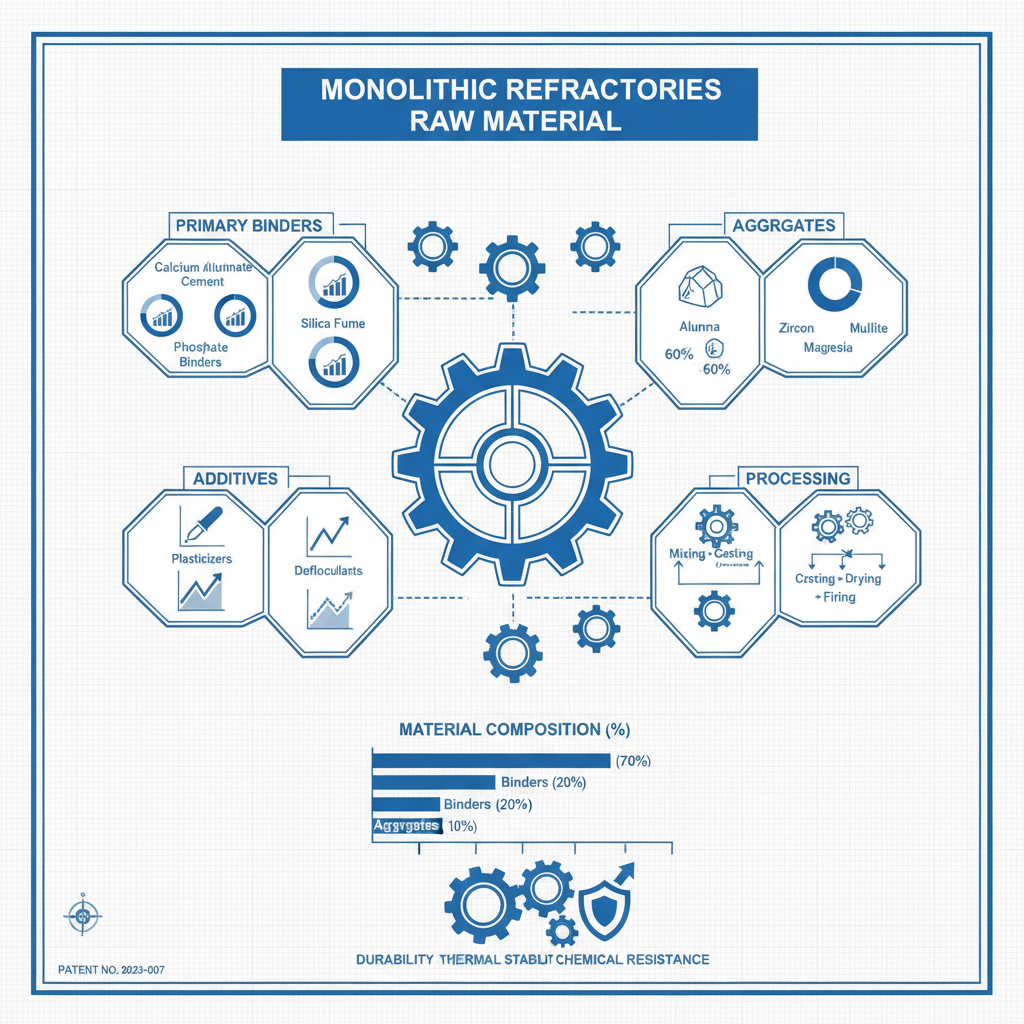
A variety of raw materials are employed in the production of monolithic refractories, each contributing unique properties. These can be broadly categorized into binders, fillers, and reactive aggregates. Common binders include calcium aluminate cements, phosphates, and sodium silicate. Fillers like alumina fume and silica fume contribute to packing density and reactivity. Reactive aggregates, such as calcined alumina, magnesia, and chromite, form the primary refractory phase at high temperatures. The specific composition depends on the intended application and desired properties, like thermal shock resistance, slag resistance, and mechanical strength.
Key Highlights: The selection of raw materials directly impacts the refractory's ability to withstand extreme temperatures, corrosive environments, and mechanical stresses. High-quality materials are vital for long-term performance.
Detailed Look at Monolithic Refractories Raw Material: Alumina and Magnesia
Alumina (Al2O3) and Magnesia (MgO) are two of the most crucial raw materials. Alumina offers high refractoriness, excellent resistance to chemical attack, and good mechanical strength. It is widely used in applications involving high temperatures and corrosive environments. Magnesia exhibits even higher refractoriness and is particularly resistant to basic slags, making it ideal for steelmaking furnaces. The purity, particle size distribution, and sintering behavior of these raw materials are key factors affecting the final refractory properties.
Alumina & Magnesia Properties:
• High Refractoriness: Withstand extremely high temperatures.
• Chemical Resistance: Resist attack from various corrosive substances.
• Mechanical Strength: Maintain structural integrity under load.
• Sintering Behavior: Crucial for developing a strong, dense refractory structure.
Comparing Monolithic Refractories Raw Material: Alumina vs. Magnesia
While both alumina and magnesia are essential refractory materials, they excel in different areas. Choosing between them (or a combination of both) requires careful consideration of the specific application. Alumina generally exhibits better spalling resistance, while magnesia provides superior resistance to basic slags. The cost of magnesia is often higher than alumina. Xingtai LuXi provides both materials in various grades to meet diverse customer needs.
Xingtai LuXi's Range of Monolithic Refractories Raw Materials
Xingtai LuXi Refractory Co., Ltd. specializes in the production and supply of high-quality monolithic refractories raw materials. We offer a comprehensive range of alumina, magnesia, and other essential materials in various grades and particle sizes to meet the specific requirements of our customers. Our commitment to quality control and consistent product performance ensures reliable results in demanding industrial applications. Contact us today to discuss your raw material needs.
Factors Influencing Raw Material Selection
Selecting the appropriate raw materials goes beyond just considering the chemical composition. Particle size distribution, mineralogical composition, and the presence of impurities all play a critical role. A well-graded particle size distribution ensures optimal packing density, reducing porosity and enhancing strength. The presence of certain impurities can influence sintering behavior and high-temperature performance. At Xingtai LuXi, we conduct rigorous testing to ensure our materials meet stringent quality standards and consistently deliver exceptional results.
Conclusion: Choosing the Right Foundation for Refractory Success
Investing in high-quality monolithic refractories raw materials is crucial for ensuring the durability, performance, and longevity of your refractory systems. Xingtai LuXi Refractory Co., Ltd. is committed to providing reliable, consistent, and high-performing raw materials tailored to your specific application. Don't compromise on quality – choose Xingtai LuXi as your trusted partner.
Frequently Asked Questions (FAQs)
What is the importance of particle size distribution in raw materials?
Particle size distribution plays a vital role in the packing density of the refractory mix. A well-graded distribution, containing a range of particle sizes, minimizes void space, leading to a denser, stronger, and more durable refractory. Optimal packing density reduces porosity, which can weaken the refractory and make it more susceptible to slag penetration. Xingtai LuXi carefully controls the particle size distribution of our raw materials to ensure optimal performance. A finer particle size can also increase reactivity during sintering, contributing to a more robust structure. However, excessively fine particles can increase the risk of dusting and handling issues.
How does Xingtai LuXi ensure the quality of its raw materials?
Xingtai LuXi employs a rigorous quality control process at every stage of production, from sourcing raw materials to final product testing. We utilize advanced analytical techniques, including X-ray diffraction (XRD), X-ray fluorescence (XRF), and particle size analysis, to verify the chemical composition, mineralogical purity, and particle size distribution of our materials. We also conduct regular inspections of our suppliers to ensure they meet our stringent quality standards. Our commitment to quality ensures that our customers receive consistent, reliable products.
What types of binders does Xingtai LuXi offer for monolithic refractories?
Xingtai LuXi offers a variety of binders to suit different application requirements. These include calcium aluminate cements, which provide high early strength and excellent thermal shock resistance; phosphate binders, known for their strong bonding characteristics and resistance to reducing atmospheres; and sodium silicate binders, which offer good high-temperature strength and chemical stability. The selection of the appropriate binder depends on factors such as the desired setting time, the operating temperature, and the chemical environment.
-
Professional Boiler Refractory Material Supplier for Industrial Efficiency
NewsApr.16,2026
-
How to Choose the Best refractory materials suppliers for Success
NewsApr.09,2026
-
Understanding Refractory Bricks Raw Materials for High Temperature Applications
NewsApr.07,2026
-
PLIbrico Refractory Materials Understanding Applications and Benefits
NewsApr.04,2026
-
Advancements in Reversible Thermal Expansion Refractory Materials for High Temperature Applications
NewsMar.31,2026
-
Comprehensive Guide to Refractory Kiln Lining Material Selection and Applications
NewsMar.28,2026